Anal cancer often gets confused with more common cancers of the digestive tract, and this confusion delays timely conversations with a doctor. The truth is, anal cancer is rare in India, and understanding what leads to it can help you and your family take sensible, informed precautions.
This blog walks you through the causes of anal cancer, the symptoms worth watching for and how treatment works at a specialised oncology hospital in India, so you feel equipped rather than alarmed.
What Are the Main Causes of Anal Cancer?
Persistent HPV Infection
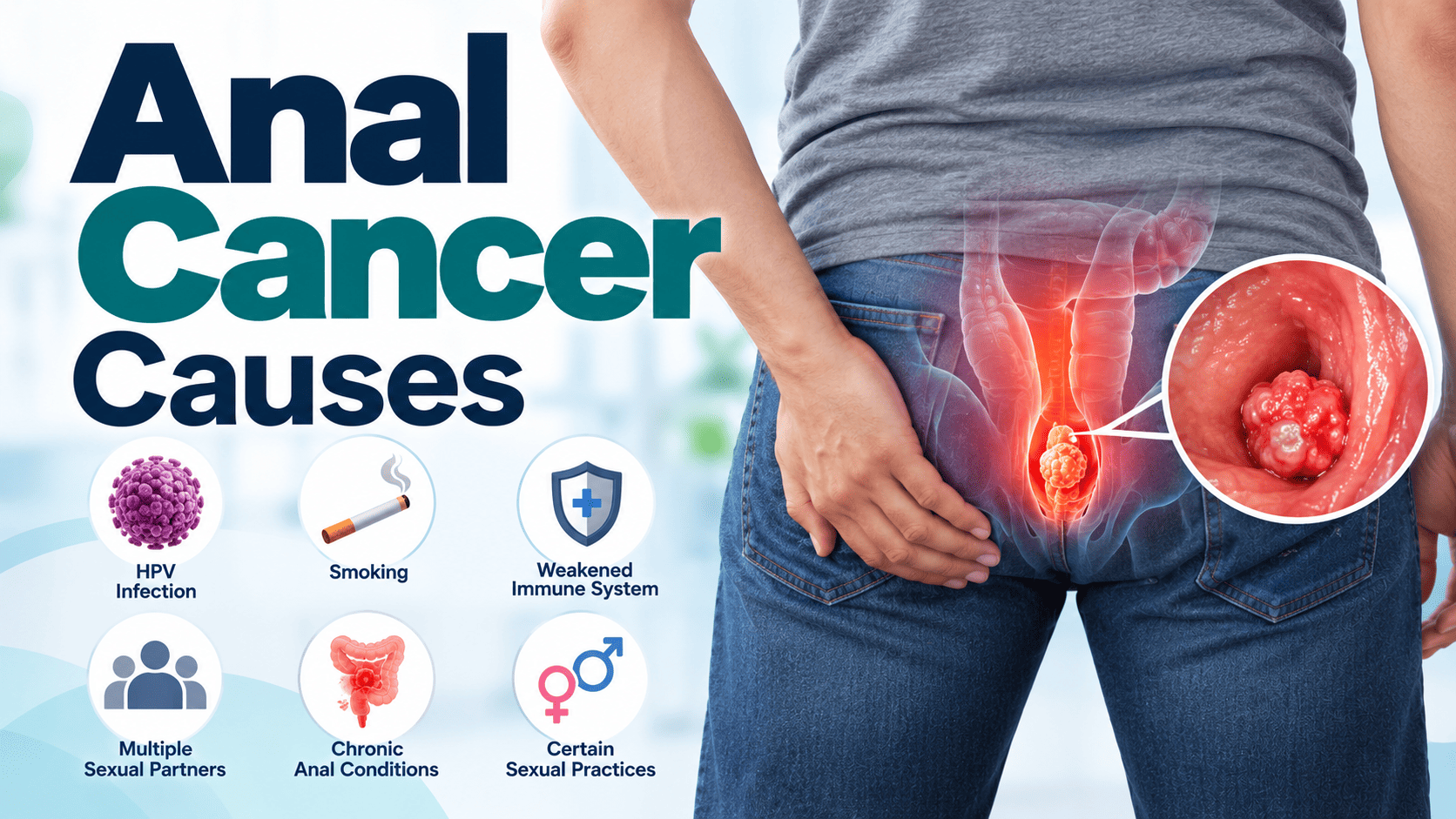
The single most significant driver among the causes of anal cancer is persistent infection with high-risk strains of human papillomavirus (HPV), particularly HPV-16.
Research on Indian patients found HPV prevalence of 52.2% in anal cancers, making it a clinically relevant factor for Indian oncologists to consider during diagnosis. It is worth noting that HPV infection is extremely common and usually clears on its own. Cancer occurs in only a small fraction of cases in which the infection persists for many years.
Weakened Immune Function
A compromised immune system, whether from HIV infection, long-term immunosuppressive medication after organ transplant or chronic autoimmune therapy, makes it harder for the body to clear HPV naturally. This is one reason doctors recommend closer monitoring for patients with existing immune-related conditions.
Using tobacco
Use of tobacco greatly increases the risk of anal cancer. The chemicals in cigarette smoke are carried in the bloodstream and can damage cells all over the body, including the lining of the anus, and also reduce local immune defence.
History of Other HPV-Related Cancers
Patients who have previously had cervical, vagina, or vulvar cancer carry a somewhat higher risk of anal cancer, since these cancers share the same underlying HPV mechanism.
Chronic Local Irritation
Long-standing anal fistulas, fissures or inflammatory conditions in the area have been associated with a modestly increased risk, likely because of prolonged tissue irritation and cellular changes over time.
Age and Gender Patterns
Anal cancer is more frequently diagnosed in adults over 50, and it tends to be somewhat more common in women than men, though it can affect anyone.
Anal Cancer Symptoms to Watch For
Recognising anal cancer symptoms early makes a meaningful difference in how straightforward your treatment journey becomes. Common indicators include:
- Bleeding from the anus or blood in stool
- A persistent lump or swelling near the anal opening
- Pain or a feeling of pressure in the anal area
- Itching or discharge that doesn't resolve
- Changes in bowel habits, including narrowing of stool
- A sensation of incomplete bowel emptying
It's important to remember that these anal cancer symptoms overlap significantly with far more common and far less serious conditions like haemorrhoids or fissures. This is precisely why self-diagnosis isn't useful, and a proper clinical evaluation is. If any of these symptoms persist beyond two to three weeks, a visit to your doctor or an oncologist is a sensible, unhurried next step.
How Is Anal Cancer Diagnosed in India
Diagnosis typically begins with a physical examination, followed by a digital rectal exam. If anything looks suspicious, your doctor will likely recommend a proctoscopy or anoscopy to look inside the anal canal and a biopsy to determine the type of tissue.
Imaging tests such as MRI, CT or PET-CT help determine whether the cancer has spread and guide staging. Indian oncology hospital networks now offer most of these diagnostic services under one roof, which considerably shortens the time between suspicion and a confirmed diagnosis.
Anal Cancer Treatment Options Available in India
The good news is that anal cancer treatment has strong outcomes, particularly when detected at an early stage. Unlike many GI cancers, anal cancer often responds very well to non-surgical approaches.
Chemoradiation is the standard first-line treatment for most anal cancers. It combines radiation therapy with chemotherapy drugs. It typically is given for five to six weeks and successfully controls the disease in a majority of early and locally advanced cases without needing major surgery.
Surgery is used when the tumour is not completely cleared by chemoradiation or for very early small lesions that can be locally excised. In more extensive cases, an abdominoperineal resection may be needed.
Targeted and systemic therapy is used for cancer that has spread beyond the anal region. Experts often combine it with a broader anal cancer treatment plan that is tailored to the patients.
Every treatment plan at a reputed oncology hospital is built around your specific stage, overall health and personal preferences, with a multidisciplinary team involved in the decision.
Ending Note
Anal cancer, while uncommon, is highly manageable when caught early and treated by the right team. Understanding the causes of anal cancer empowers you to recognise risk factors in your own life and seek timely care rather than ignoring persistent symptoms.
With advanced diagnostic tools and effective treatment protocols now widely available across India, patients have genuine reason for confidence in their care journey.
FAQs
Is anal cancer the same as colorectal cancer?
No. Anal cancer originates in the anal canal and is mostly linked to HPV infection. Colorectal cancer, however, develops in the colon or rectum. And it does so through a different biological pathway, usually from polyps.
Can anal cancer be cured completely?
Yes, particularly when detected early. Chemoradiation achieves excellent control rates for localised anal cancer. In fact, many patients go on to live cancer-free for years after treatment completion.
Do I need surgery for anal cancer treatment?
Not always. Most patients are treated successfully with chemoradiation alone. Surgery is considered only if the tumour doesn't respond adequately or if the case requires a different treatment approach from the start.