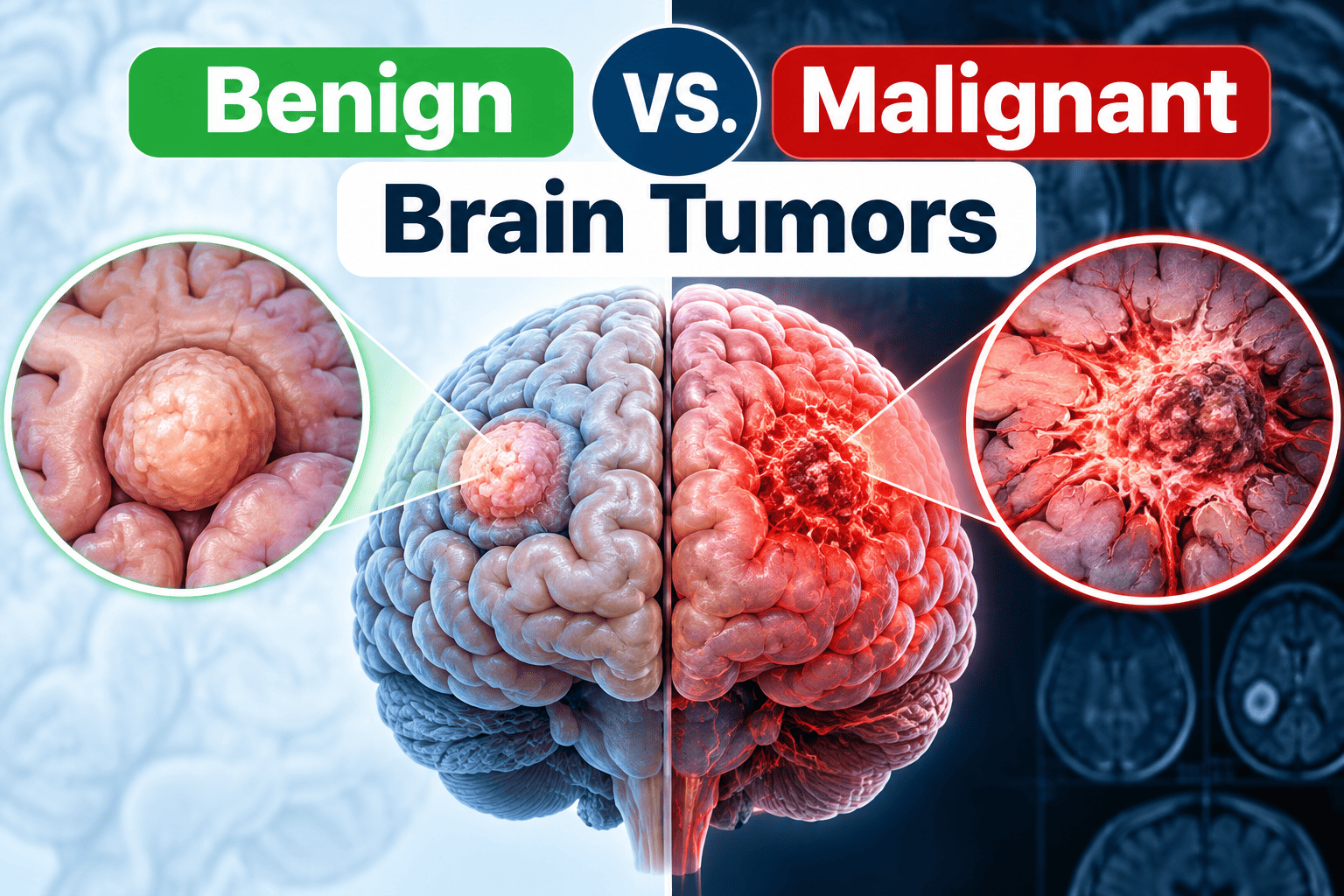
A brain tumor diagnosis brings up one question almost immediately: is it dangerous? The honest answer depends entirely on whether the tumor is benign or malignant, and this single distinction changes everything about the path ahead, from treatment choices to long-term outlook.
This blog breaks down what separates a benign brain tumor from a malignant brain tumor. As such, you or your loved one can understand what the diagnosis actually means and what steps come next.
What Does “Benign” Mean in a Brain Tumor?
A benign brain tumor grows slowly and does not spread to other parts of the brain or body. Its cells look close to normal under a microscope, and the tumor usually stays contained within a defined boundary. This does not mean it is harmless, though. Depending on where it sits, even a benign growth can press against nerves or brain tissue and cause real symptoms. The encouraging part is that many benign tumors can be monitored over time or removed completely with surgery, often without returning.
What Makes a Tumor Malignant?
A malignant brain tumor behaves very differently. These cells grow faster, invade surrounding brain tissue, and in some cases spread to other areas of the central nervous system.
When seen through a microscope, malignant cells appear irregular as well as disorganized. Also, their ability to grow into healthy tissues without staying within a clear boundary makes complete removal via surgery a complicated process. As such, a combination of approaches is used instead of surgery alone to treat malignant tumors.
Why the Distinction Matters for Treatment
How Doctors Tell Them Apart
Diagnosis begins with an MRI or CT scan. This scan aids the neuro-oncology team in obtaining a detailed information on the tumor's size, shape and location. A biopsy helps determine whether the cells are benign or malignant. During the process, the experts take a small tissue sample to examine it in the lab. Biopsy even assigns a grade based on how the cells appear.
This grading is guided by World Health Organization classification. It tells doctors how the tumor might behave and shapes the entire treatment plan.
Planning the Right Brain Tumor Treatment
Brain tumor treatment for benign growths often involves surgical removal, and in cases where the tumor is small or in a hard-to-reach spot, targeted radiosurgery may be used instead of open surgery.
Malignant tumors typically require a combined approach: surgery to remove as much of the tumor as safely possible, followed by radiation therapy and often chemotherapy to address remaining cells.
At a well-equipped oncology hospital, this plan is built by a multidisciplinary team rather than a single specialist working alone, which matters because brain tumor care genuinely benefits from multiple perspectives working together.
Recognizing Brain Tumor Symptoms Early
Brain tumor symptoms can overlap significantly between benign and malignant cases. This is exactly why self-diagnosis based on symptoms alone rarely works. Common signs include persistent headaches, especially those worse in the morning, new seizures, gradual vision or hearing changes, unexplained nausea and subtle shifts in memory or coordination that family members often notice first.
Make a note that none of these symptoms confirm malignancy on their own. They simply indicate that an evaluation by an oncologist or neurologist is worth scheduling.
Some Reassuring Context
It helps to know the bigger picture here. In India, the reported incidence of brain and central nervous system tumors is estimated at around 5 to 10 cases per 100,000 people, and industry experts note that only about two percent of these growths turn out to be cancerous. This means that most brain tumors people worry about turn out to be benign, and even malignant cases respond meaningfully to timely treatment.
Taking the Next Step
If you or someone close to you has noticed persistent symptoms, the most useful step is a proper evaluation rather than prolonged worry. A consultation with an experienced oncologist, supported by accurate imaging and, where needed, a biopsy, gives you clarity instead of guesswork.
Whether the diagnosis turns out to be a benign brain tumor or a malignant brain tumor, having a clear picture early allows your care team to plan the most effective and least invasive brain tumor treatment available for your specific case.
FAQs
Can a benign brain tumor become malignant over time?
It is not common, but certain benign tumors are known for changing their behavior with time. Regular monitoring via periodic scans allows doctors to catch any changes before time. It is why follow-ups matter even after the initial treatment is over.
Do all brain tumor symptoms mean cancer?
No. Headaches, dizziness and similar symptoms have many possible causes. Visiting an oncology hospital for an evaluation will help in determining the actual cause instead of assuming the worst from the symptoms.
Is brain tumor treatment always surgical?
Not always. Smaller or hard-to-reach tumors may be managed with radiosurgery or radiation therapy instead of open surgery, depending on tumor type, location and the patient's overall health.