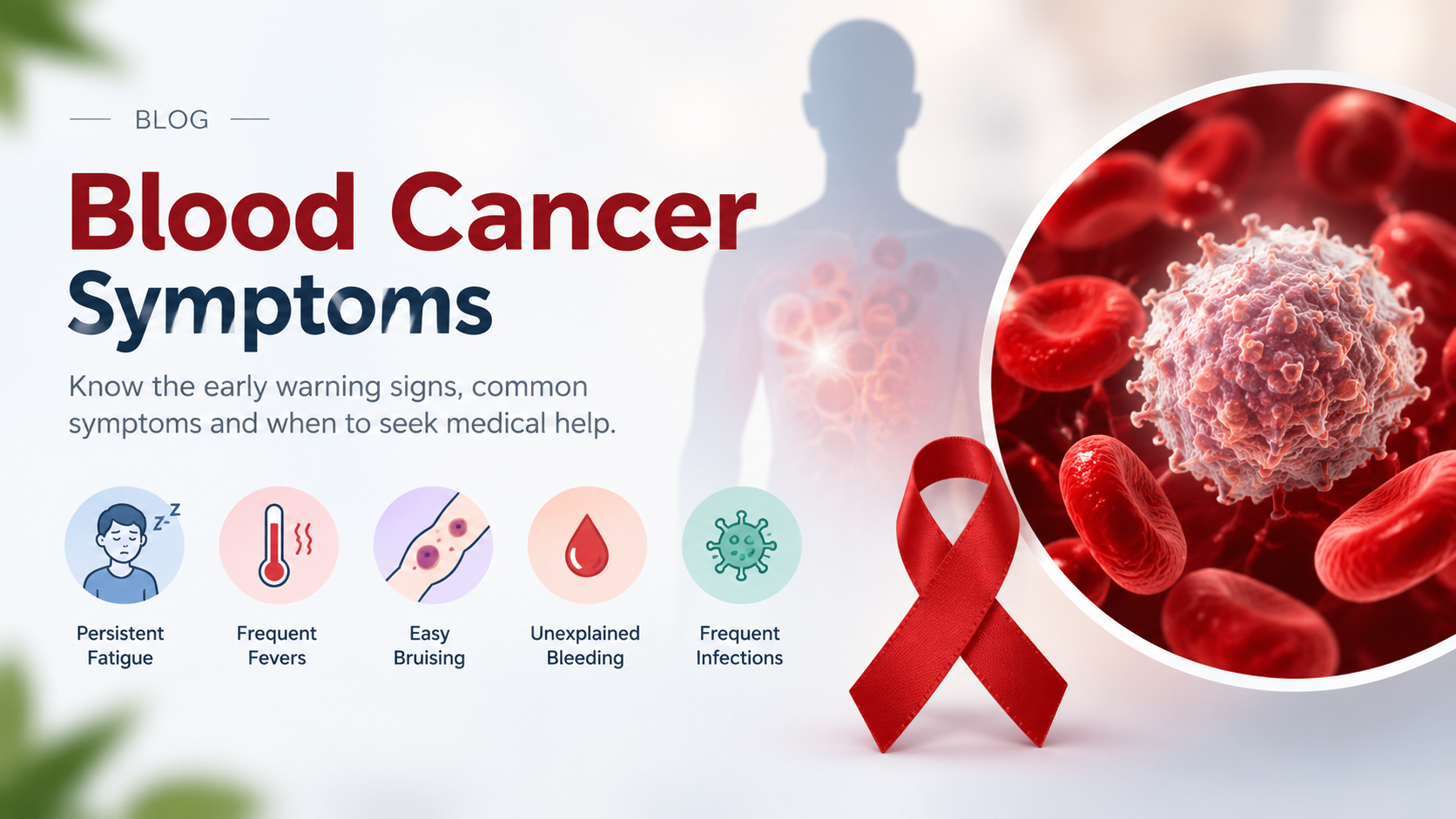

When someone in the family looks paler than usual, feels tired without explanation or keeps falling sick repeatedly, it is easy to dismiss these as stress or a seasonal flu. In many Indian households, these signs go unaddressed for months. What most people do not realise is that some of these persistent, seemingly ordinary symptoms can point toward blood cancer.
Blood cancer, or haematological malignancy, affects the blood, bone marrow and lymphatic system. It is not one disease but a group of conditions including leukaemia, lymphoma and myeloma. The encouraging part is this: when recognised early, many forms of blood cancer are manageable and, in several cases, curable. This is exactly why knowing what to look for matters so deeply.
Why Blood Cancer Symptoms Are So Easy to Miss
Unlike a visible lump or a localised pain, blood cancer rarely announces itself dramatically. Its symptoms overlap significantly with everyday illnesses, which is why many patients in India receive their diagnosis only after the disease has progressed.
The early signs of blood cancer tend to be gradual and non-specific. Fatigue that does not improve with rest, a low-grade fever that lingers for weeks, or bruises appearing without any injury are often brushed aside. By the time a blood test is done, the disease has sometimes been present for months.
This does not mean the outcome is poor. It simply means that awareness of these signs, combined with timely testing, can make a significant difference in how treatment unfolds.
Common Blood Cancer Symptoms in Adults
Understanding blood cancer symptoms in adults requires looking at the body as a whole, because blood cancer disrupts normal cell production, and this disruption shows up in multiple ways.
Persistent Fatigue and Weakness
The most noted early symptom is a deep, unshakeable tiredness. It occurs because abnormal blood cells take over healthy red blood cells, lowering the supply of oxygen to tissues as well as organs. Patients often mention that they feel exhausted even after sleeping well at night.
Unexplained Weight Loss
Losing weight without any change in diet or activity level is a warning sign that suggests proper evaluation. Cancer cells take a lot of your energy, and the body's metabolism shifts in ways that result in muscle as well as fat loss over time.
Repeated Infections
Healthy white blood cells are important for the immune system. When blood cancer disrupts their production, the body is less able to fight infections. Within a short time, patients may develop recurrent fevers, sore throats or pneumonia.
Swollen Lymph Nodes
Painless swelling in the neck, armpits or groin is one of the early signs of blood cancer, particularly in lymphoma. Many patients notice a lump that does not hurt and assume it is harmless. Any swollen lymph node that persists beyond three to four weeks should be evaluated.
Easy Bruising and Unusual Bleeding
Low platelet counts are common in blood cancers. However, it impairs the blood's ability to clot. This leads to bruising from minor contact, prolonged bleeding from small cuts or spontaneous nosebleeds.
How Symptoms Differ Between Men and Women
Blood Cancer Symptoms in Men
Blood cancer symptoms in men sometimes appear alongside fatigue-related symptoms that are initially attributed to work stress or lifestyle habits. Bone pain, particularly in the back or ribs, is more frequently reported in men with multiple myeloma. Swollen lymph nodes in the neck and armpit area are also common early presentations in male lymphoma patients.
Blood Cancer Symptoms in Women
Blood cancer symptoms in women can include heavier than usual menstrual periods as a result of low platelet counts, which is a symptom many women attribute to hormonal changes. Shortness of breath during routine activity, paleness of the skin and persistent headaches are other symptoms that deserve attention rather than dismissal.
It is worth noting that blood cancer symptoms in women are frequently underreported in India, often because women tend to prioritise other family members' health before their own.
When to See a Doctor
The early signs of blood cancer do not confirm a diagnosis on their own. A complete blood count (CBC) is the first test most doctors order when these symptoms are present, and it takes very little time to get results. If the CBC shows abnormalities, your doctor will recommend further tests, including a bone marrow biopsy, flow cytometry or imaging.
Do not wait for symptoms to become severe. Reaching out to experienced oncologists at a dedicated oncology hospital can set you on the right path quickly.
Conclusion
Blood cancer is not a death sentence. For many patients, it is a condition that can be treated effectively when caught in time. If you or someone you love has been experiencing any combination of the symptoms discussed here for more than three to four weeks, please see a doctor. A simple blood test is where answers often begin.
FAQs
Can blood cancer symptoms appear suddenly?
In some aggressive forms like acute leukaemia, blood cancer symptoms in adults can escalate quickly over days to weeks. In slower-growing types like chronic lymphocytic leukaemia, symptoms build gradually over months. Either way, early evaluation leads to better outcomes.
Are blood cancer symptoms different from anaemia symptoms?
There is significant overlap, including fatigue, paleness and breathlessness. However, blood cancer usually presents with additional symptoms such as swollen lymph nodes, recurrent infections or unexplained bruising. A blood test helps distinguish the two.
What should I do if I notice these symptoms?
Start with a visit to your general physician, who will order a blood count. If results are abnormal, you will be referred to oncologists at a specialised oncology hospital for further evaluation. Acting early is the single most important step you can take.