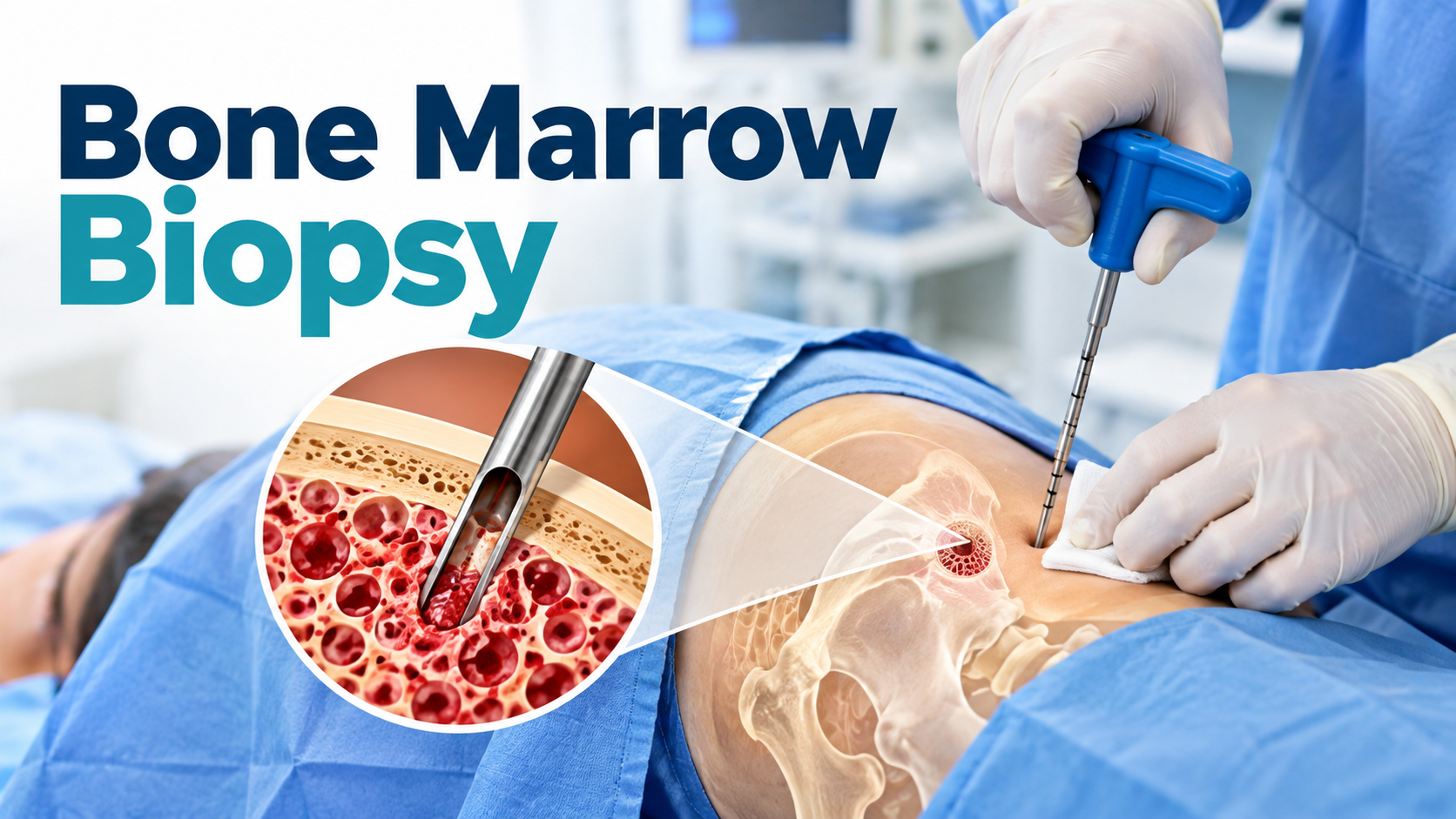

Receiving a recommendation for a bone marrow biopsy procedure can feel overwhelming, especially when you are already navigating an uncertain diagnosis. The term sounds intimidating. But understanding what it actually involves, why your oncologist has recommended it and what the experience typically feels like helps replace fear with clarity.
This blog walks you through the process in straightforward terms so that you, or a loved one preparing for this test, can approach it with the right information.
Why Your Oncologist Recommends This Test
A bone marrow test is not ordered routinely. It is a targeted investigation recommended when your blood reports show persistent abnormalities that cannot be explained by simpler tests alone.
Conditions That Prompt a Bone Marrow Investigation
Your oncologist may suggest this investigation if your complete blood count shows unexplained anaemia, an unusually low or high white blood cell count or a sharp drop in platelets. Conditions like leukaemia, lymphoma, multiple myeloma, aplastic anaemia and myelodysplastic syndrome all originate in or directly affect the bone marrow. The only way to confirm or rule out these diagnoses with certainty is to examine marrow cells directly.
In an oncology hospital setting, the bone marrow biopsy procedure is also used after a cancer diagnosis to understand how far the disease has spread or during treatment to check how well the marrow is responding to therapy.
What Exactly Is Bone Marrow?
Bone marrow is a soft tissue inside your larger bones, primarily the pelvis, sternum and femur. It is responsible for producing red blood cells, white blood cells and platelets. When something disrupts this production, the effects show up in your blood tests first. The bone marrow test investigates the source of that disruption at its origin point.
Understanding the Bone Marrow Biopsy Procedure
Aspiration vs. Biopsy: What Is the Difference?
These two terms are often used together because they are usually performed during the same sitting.
- Bone marrow aspiration involves drawing a small sample of the liquid marrow using a needle.
- The bone marrow biopsy procedure that follows retrieves a small core of solid bone marrow tissue.
Together, they give the pathologist both the cellular fluid and the structural tissue needed for a complete analysis.
Where Is It Performed?
In most oncology hospitals across India, this procedure is performed at the posterior iliac crest. It is the curved bone at the back of your hip. It is a well-established site because it is easily accessible, holds adequate marrow and allows the patient to lie comfortably during the procedure.
What Happens During the Procedure?
You will lie on your stomach or side. The area is cleaned and a local anaesthetic is injected to numb the skin and the tissue around the bone. Once the area is numb, the aspiration needle is inserted to draw the liquid marrow sample.
Most patients feel a brief pulling or pressure sensation at this point. And this sensation lasts only a few seconds. The biopsy needle then collects the small tissue core. The entire procedure typically takes 20 to 30 minutes from preparation to completion.
Is It Painful?
This is the question most patients ask first. The local anaesthetic manages surface discomfort effectively. The brief pressure felt during bone marrow aspiration is real but short-lived. Most patients describe it as an unusual sensation rather than sharp pain. Sedation is available in many centres for patients who are anxious or have a lower pain threshold, particularly for children.
After the Procedure: What to Expect
Once the samples are collected, the site is bandaged, and you are observed for a short period before being discharged. You can generally return home the same day. The area may feel tender for two to three days. So, taking over-the-counter pain relief is usually sufficient.
Strenuous physical activity should be avoided for 24 to 48 hours. The biopsy site should be kept dry for at least a day. Results from a bone marrow test typically take 7 to 14 days, as the samples undergo processing, staining and detailed pathological review.
What the Results Mean
Your oncologist will review the results in the context of your full clinical picture. A single report is never interpreted in isolation. Depending on findings, further molecular or cytogenetic tests may follow to guide treatment decisions more precisely.
Ending Note
A bone marrow biopsy is a carefully considered, clinically necessary step in diagnosing or monitoring conditions that affect the blood and marrow. It is not something your oncologist recommends without good reason, and it is not something you need to fear. Knowing what to expect before you walk into an oncology hospital for this procedure makes a genuine difference to how you experience it.
If you or a family member has been advised a bone marrow biopsy procedure, speak openly with your oncologist about your concerns. No question is too small when your health is at stake.
FAQs
How long does a bone marrow biopsy procedure take?
The process itself takes approximately 20 to 30 minutes. You will be observed for a short period afterward before discharge. Having a family member or companion with you is advisable, both for practical support during the visit and for the short rest recommended afterward.
Can I eat and drink normally before a bone marrow test?
In most cases, yes. A bone marrow test done under local anaesthesia does not require fasting. However, if sedation is planned, your oncology hospital will give you specific fasting instructions beforehand.
What should I tell my doctor before bone marrow aspiration?
Inform your oncologist if you are taking blood thinners, aspirin or any anticoagulant medication. You may need to pause using them before bone marrow aspiration. Also disclose any known allergies, particularly to local anaesthetic agents, and any prior bleeding disorders.