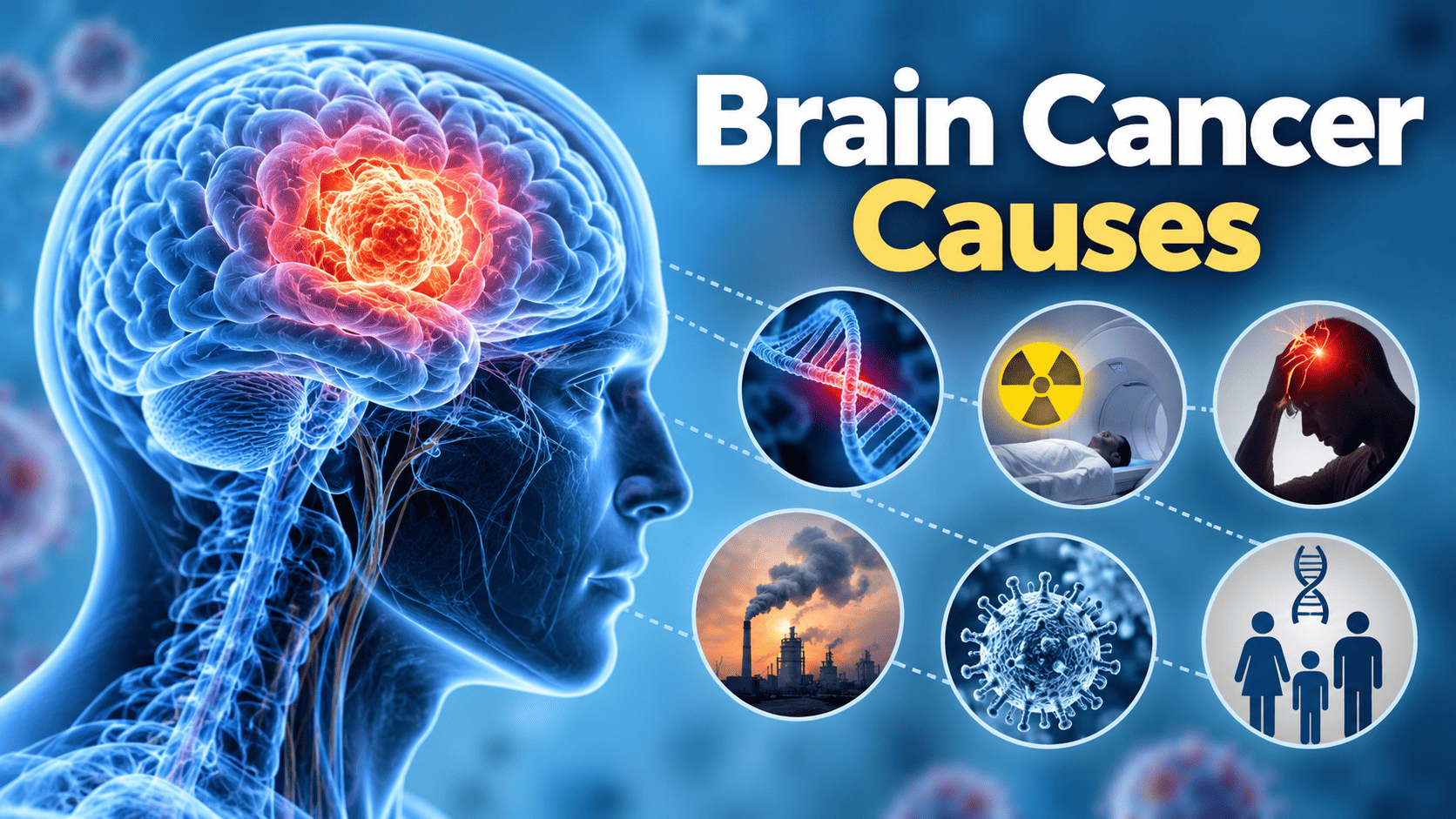
Brain cancer is one of those diagnoses that can leave you and your family with more questions than answers. What went wrong? Could this have been prevented? What happens next? These are completely natural questions, and understanding what causes brain cancer and what does not is often the first step toward feeling more in control of the situation.
This blog does not carry alarming statistics or worst-case scenarios. Instead, it offers clear, grounded information to help you understand what is happening inside the body so that you or your loved one can make informed decisions going forward.
What Is Brain Cancer, and How Does It Begin?
The brain is made up of billions of cells that grow, divide and replace themselves in a controlled way. Brain cancer begins when something disrupts this process. As such, certain cells may start dividing abnormally and forming a mass called a tumour.
Some tumours are benign, meaning they do not spread to other parts of the brain or body. Others are malignant. It means that these grow more aggressively and can invade surrounding tissue. When doctors refer to brain cancer, they are typically referring to malignant tumours.
Brain tumours can be primary (originating in the brain) or secondary (spreading from cancer in another part of the body, such as the lungs or breast). Both types are treated very differently, which is why an accurate diagnosis from an experienced oncologist is so important before any treatment begins.
Brain Tumor Causes: What the Research Tells Us
Understanding brain tumor causes is something researchers worldwide are still actively studying. Unlike some cancers, brain cancer does not have one single, definitive cause. Instead, several biological, genetic as well as environmental factors are believed to contribute.
Genetic and Inherited Risk Factors
In a small number of cases, brain tumours are linked to inherited genetic conditions. Conditions such as neurofibromatosis, Li-Fraumeni syndrome and Von Hippel-Lindau disease are known to increase brain tumour risk. If brain cancer runs in your family, your oncologist may recommend genetic counselling to assess your personal risk.
Exposure to Ionising Radiation
Exposure to high-dose ionising radiation, particularly radiation therapy used to treat other cancers during childhood, is one of the more clearly established brain tumor causes. It is important to note that everyday sources like mobile phones and Wi-Fi have not been proven to cause brain cancer, despite widespread concern about them.
Age and Some Biological Factors
Brain tumors can affect anyone at any age. But some types are more common in certain age groups. Glioblastoma tends to be more common in older adults. Researchers also note hormonal and immune system factors may play a role, though this area of study is still evolving.
What About Lifestyle Factors?
This is a question many patients ask. Currently, there is no strong evidence linking diet, stress or mobile phone use directly to what causes brain cancer. Smoking and alcohol, while harmful to overall health, have not been firmly established as direct brain cancer causes either. This does not mean lifestyle does not matter; it means brain cancer is not your fault.
What Causes Brain Cancer to Progress: Warning Signs to Know
Once a tumour begins growing, symptoms depend on its size and location in the brain. Common signs include persistent headaches, changes in vision or speech, unexplained nausea, memory changes or seizures. These symptoms do not always mean cancer, but they should always be evaluated promptly at a reputed oncology hospital.
What You Can Do Next
If you or a loved one has received a brain tumour diagnosis or is experiencing unexplained neurological symptoms, early evaluation is key. An experienced oncologist at a capable oncology hospital will typically begin with imaging studies such as an MRI, followed by a biopsy if needed, to determine the nature and grade of the tumour.
Understanding what causes brain cancer in your specific case helps your care team design the right treatment plan. It could either involve surgery, radiation, chemotherapy or a combination.
You do not have to figure this out alone.
FAQs
Can mobile phone use cause brain cancer?
Current scientific evidence does not establish a proven link between mobile phone use and brain cancer. Major health organisations worldwide continue to monitor research in this area, but no definitive causal connection has been confirmed to date.
Is brain cancer hereditary?
In most cases, brain cancer is not directly inherited. However, certain rare genetic syndromes can increase the risk. If you have a family history of brain tumours, speak with an oncologist about whether genetic testing is appropriate for you.
What is the difference between a brain tumour and brain cancer?
A brain tumour is an abnormal growth, both benign and malignant, of cells in the brain. Brain cancer refers to tumours that are malignant, grow aggressively and are capable of spreading within the brain. Not every brain tumour is cancerous, making proper diagnosis critical.