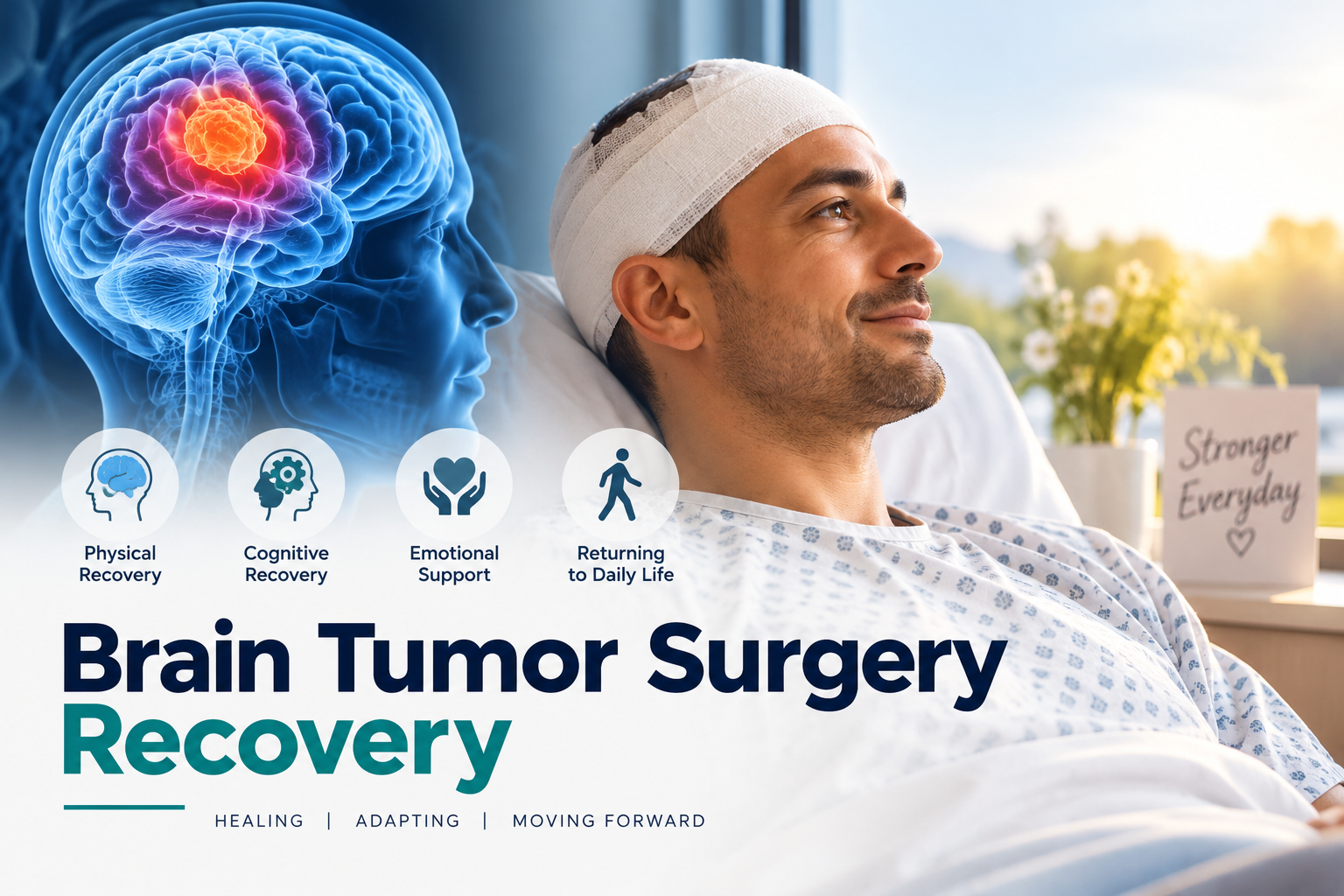
When the surgery is done and the relief of it being over finally settles in, most patients and their families assume the hardest part is behind them. In many ways, it is. But brain tumor surgery recovery is its own chapter, and it deserves as much attention as the surgery itself. Knowing what to expect, day by day and week by week, makes the whole process significantly less frightening.
This guide covers what recovery genuinely looks like, the decisions you will face and why listening to your medical team during this phase matters more than most people realise until they have experienced it firsthand.
The First Few Days: What Happens in Hospital
After surgery, you will be shifted to an ICU or neuro-critical care unit. This is routine at any good oncology hospital handling neurosurgical cases, not a sign of trouble. The team watches brain pressure, oxygen levels and neurological responses around the clock during this period.
Common Experiences in the Early Days
Grogginess and confusion are expected in the first 24 to 48 hours. Some patients find it hard to recall simple things or form complete sentences for a short while. Others notice mild weakness on one side of the body. These effects are often temporary, settling as the brain begins to recover from the procedure.
Headaches, fatigue and tenderness around the incision are part of the recovery too. Pain is managed through medication, adjusted by your surgical team as your condition changes. Most patients undergoing brain surgery recovery at a dedicated oncology hospital in India are discharged between five and ten days after the procedure, depending on how they respond.
Coming Home: The First Month
Returning home is a welcome milestone, but it comes with its own set of adjustments. This is the phase where patients often underestimate how much rest they actually need.
Rest Is Non-Negotiable
The brain is healing from a significant intervention. It needs more energy for that than most people account for. Patients who push themselves to do too much too soon often find their fatigue worsens rather than improves. Get more sleep than you think you need, and rest between activities. Rest is not laziness. It is an important part of healing.
Activity and Movement
Short walks around the house, starting gently and building gradually, are encouraged from the early days at home. They improve circulation, reduce the risk of blood clots forming in the legs and help prevent the muscle weakness that comes with extended bed rest. What is not appropriate during this period includes driving, lifting heavy objects, climbing stairs repeatedly or any physical activity that strains the body or raises heart rate significantly.
Wound Care and Medications
Steroids are typically prescribed after brain surgery to manage swelling. Anti-seizure medications are given to many patients as a precaution even when no seizures have occurred. Both need to be continued exactly as directed. Stopping either without your doctor's guidance can lead to complications that are serious and completely avoidable. If side effects bother you, speak to your oncologist before making any changes.
Weeks Four to Twelve: Gradual Return and Continued Treatment
This phase of recovery after brain tumor surgery is where life begins to feel more like itself again, but it also often coincides with adjuvant treatment such as radiation therapy or chemotherapy, depending on what the tumor requires.
Rehabilitation Support
If surgery has affected speech, movement, or memory, rehabilitation becomes a central part of brain surgery recovery. Physiotherapy, occupational therapy, and speech therapy are all offered within comprehensive oncology hospital settings in India and make a meaningful difference in long-term outcomes.
Emotional Health Matters
Low mood, anxiety, irritability and low motivation are common during brain tumor recovery and frequently go unaddressed because patients feel they should simply be grateful the surgery went well. Both feelings can exist together. Counselling support, available at most oncology centres in India, helps patients process what they have been through and move forward more steadily.
Six Months Onwards: Life After Brain Surgery
Many patients return to work, travel and meaningful daily routines within six months. Regular MRI scans continue on a schedule your oncologist sets, allowing early detection of any changes. These follow-ups are not something to skip when life gets busy. They are how your team ensures your brain tumor recovery stays on track.
Final Words
Recovery after brain surgery is not linear. Some days feel like progress, some feel like a step back, and both are normal. Your focus on consistency, resting and keeping your medical team informed about your health at every stage is what matters the most.
FAQs
How long does full brain tumor surgery recovery take?
Meaningful improvement is noted within three to six months in most patients. But again, this depends on the tumour type, surgery extent and whether chemotherapy or radiation is recommended. Only your surgical team can provide a specific timeline based on your case and health condition.
Is it normal to feel emotionally low during recovery after brain tumor surgery?
Completely. Mood changes, anxiety and low motivation are commonly reported during recovery after brain tumor surgery. They reflect the enormous physical and neurological adjustment the brain is making, and speaking with a counsellor helps many patients work through this period.
When can daily activities resume after brain tumor recovery?
Light activity at home begins within weeks. Driving, returning to work and any physically demanding activity require specific clearance from your oncologist, usually somewhere between six weeks and three months, based on how your recovery is progressing.