A headache that will not go away. A moment of forgetfulness that feels unusual. Most of the time, these are nothing more than everyday stress catching up with us. But there are moments when the body sends signals that deserve a closer look, and knowing the difference can make a real impact on your health journey.
This blog walks you through the symptoms of brain tumor cases commonly seen in India, when to take them seriously and what steps to take next.
Brain Tumor: Its Impact on Indian Patients
Brain and central nervous system tumors are less common in India compared to the West, yet they still affect a meaningful number of people each year.
According to a study published in the Indian Journal of Medical and Paediatric Oncology, brain and CNS tumors rank 14th among cancers in India, with a prevalence of around 7.5 cases per 100,000 people.
The good news is that diagnostic tools and treatment options available at a good oncology hospital today are far more advanced than they were even a decade ago, which means earlier detection genuinely leads to better outcomes.
Common Symptoms of Brain Tumor to Watch For
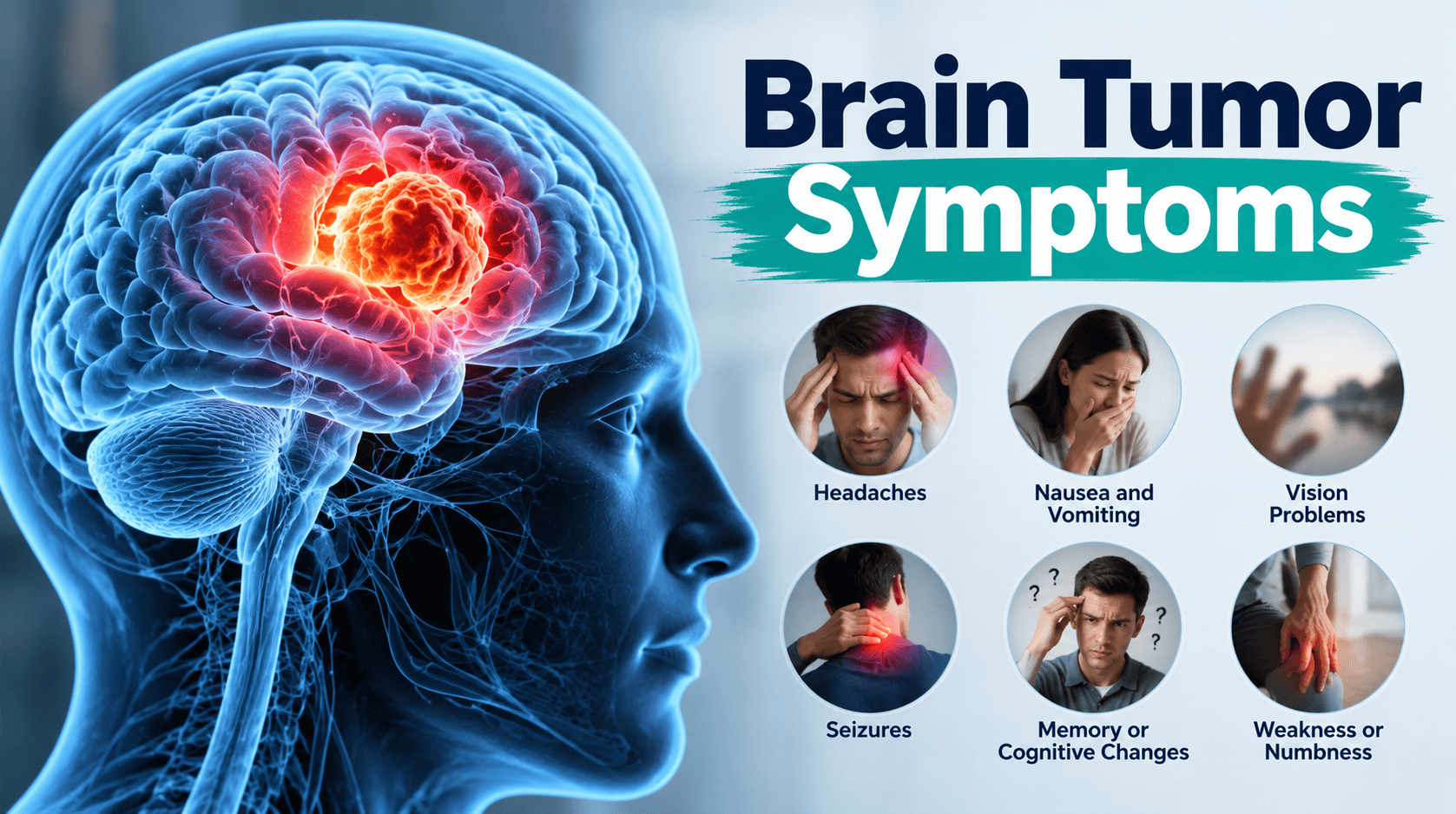
Brain tumor symptoms vary widely depending on the size and location of the growth, since different parts of the brain control different functions. That said, certain patterns tend to repeat across most cases.
Headaches That Behave Differently
Not every headache is a warning sign. What matters is the pattern. A headache that is worse in the morning, improves as the day goes on or wakes you up from sleep is worth mentioning to a doctor. The same goes for headaches that intensify with coughing, bending or straining.
Seizures Without Prior History
A seizure occurring for the first time in adulthood, with no previous history of epilepsy, is one of the more recognised early signs of brain tumor cases. Indeed, it does not automatically mean a tumor is present. However, it does call for a thorough neurological evaluation.
Vision, Speech, or Balance Changes
Blurred or double vision, difficulty finding the right words or a sudden loss of balance can all point toward pressure on specific areas of the brain. These changes are often gradual, which is precisely why they get overlooked for weeks.
Subtle Cognitive or Mood Shifts
Family members often notice this one before the patient does. Increased forgetfulness, irritability or a personality shift that feels out of character can be an early indicator worth discussing with a neurologist.
Nausea and Vomiting Without a Digestive Cause
Headaches that cause nausea, especially in the morning and is not related to the stomach, may be a sign of increased pressure inside the skull rather than a digestive problem.
Brain Cancer Symptoms Versus Benign Tumor Symptoms
It helps to know that not every tumor is cancerous. Many growths in the brain are benign, meaning they do not spread to other body parts, though they can still press on surrounding tissue and cause symptoms.
Brain cancer symptoms, associated with malignant tumors, tend to progress more rapidly and are often accompanied by faster-worsening neurological changes.
Either way, the diagnostic process and the initial consultation with an oncologist remain similar, and only proper imaging can tell the two apart with confidence.
What to Do If You Notice These Symptoms
If any of these signs sound familiar, the next step is straightforward. Arrange a consultation with a neurologist or visit a trusted oncology hospital to be evaluated. Doctors will begin with a physical and neurological exam, and may order imaging such as an MRI or CT scan. These scans give a clear picture of what is happening inside the brain. A biopsy may follow to confirm the exact type and grade of the tumor if one is found.
There is no need to assume the worst before you have answers. Many symptoms on this list have entirely unrelated, treatable causes. What matters is not ignoring a pattern that persists or worsens over a few weeks.
Moving Forward with Confidence
Recognising the early signs of brain tumor conditions is not about living in worry. It is about giving yourself or your loved one the best possible chance at early diagnosis and effective treatment.
Modern neuro-oncology teams work with precision imaging, minimally invasive techniques and multidisciplinary care plans that were not available a generation ago. If something feels persistently off with your health, trust that instinct enough to get it checked. This single decision often makes the biggest difference in the road ahead.
FAQs
Are headaches always a sign of a brain tumor?
No. Most headaches are caused by stress, dehydration or tension. A brain tumor-related headache typically follows a specific pattern, such as worsening in the morning or with straining. Also, it is usually accompanied by other neurological symptoms.
At what age are brain tumors most commonly diagnosed in India?
Brain tumor can occur at any age. However, a higher incidence of brain cancer symptoms is noted in adults between the ages of 30 and 50 years. Likewise, a distinct pattern of padeatric tumors is noted in children as well.
Can early detection improve treatment outcomes?
Yes, considerably. Early detection helps uncover a tumour at a smaller stage, which is easy to treat surgically or via radiation. Plus, the neurological complications are fewer at this stage. It is why prompt evaluation is important for better outcomes.