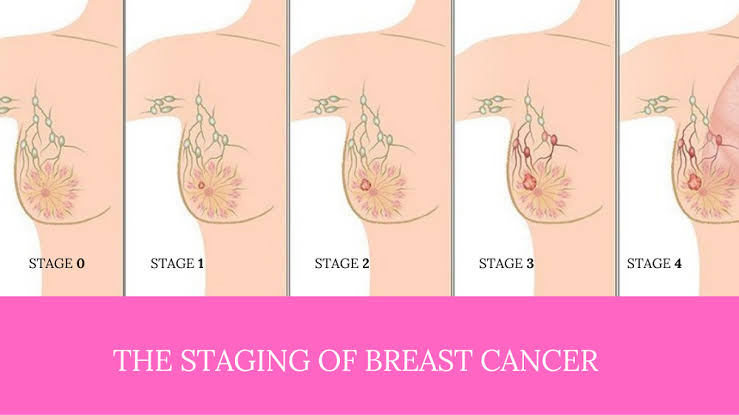

A breast cancer diagnosis comes with a lot of information arriving quickly. One of the most important pieces of this information is the stage. Staging is not just a number. It tells your oncologist how far the cancer has progressed, which organs or lymph nodes are involved, and what treatment approach gives you the best possible outcome.
This blog walks through each stage clearly, so you understand what your doctors are discussing and what it means for your care.
How Breast Cancer Staging Works
Staging follows the TNM system, which stands for Tumour size, lymph Node involvement, and Metastasis. Oncologists combine these three factors to assign a stage from 0 to IV. Each stage reflects a different degree of spread. Also, the breast cancer stages directly determine whether surgery, chemotherapy, radiation, targeted therapy, or a combination is recommended.
Stage 0: Cancer That Has Not Spread Yet
Stage 0 is also called ductal carcinoma in situ (DCIS). The abnormal cells are confined entirely within the milk duct and have not invaded surrounding tissue. There is no spread to lymph nodes either.
This is the earliest possible finding. Treatment at this stage is typically breast-conserving surgery followed by radiation, and the outcomes are excellent. Some patients with hormone receptor-positive DCIS also receive hormone therapy to reduce the risk of progression.
Stage 1 Breast Cancer: Small Tumour, Localised Disease
What Stage 1 Looks Like
Stage 1 breast cancer symptoms are often subtle or entirely absent. The tumour is small, measuring up to 2 centimetres, and either has no lymph node involvement or has only microscopic cancer cells in a sentinel lymph node. At this point, the cancer is localised to the breast.
Why Early Detection at This Stage Matters
Because the disease has not spread beyond the breast, the range of treatment options is widest here. Breast-conserving surgery (lumpectomy) followed by radiation is a standard approach. Depending on receptor status, hormone therapy or targeted therapy may be added.
Stage 1 breast cancer symptoms worth watching for include a small, firm lump in the breast that was not there before, or subtle skin changes near the nipple. Routine annual mammograms catch many stage 1 cancers before they are even felt.
Stage 2 Breast Cancer: Tumour Growth or Early Lymph Node Spread
Stage 2 breast cancer is divided into two sub-stages.
Stage 2A means either the tumour is smaller than 2 cm but has spread to one to three axillary lymph nodes, or the tumour is between 2 and 5 cm with no lymph node involvement.
Stage 2B means the tumour is between 2 and 5 cm with one to three affected lymph nodes, or larger than 5 cm with no nodal spread.
At this stage, surgery remains central to treatment. The decision between lumpectomy and mastectomy depends on tumour size relative to breast size, the patient's preference and genetic risk factors.
Chemotherapy is often suggested, either as a way of shrinking the tumour before surgery or as a way of lowering the risk of recurrence afterwards. Targeted therapy is included in the treatment plan for HER2-positive stage 2 breast cancer.
Stage 3 Breast Cancer: Locally Advanced Disease
What Makes Stage 3 Different
Stage 3 breast cancer means the cancer has spread more extensively within breast or nearby lymph nodes. However, it still hasn’t reached other organs. This stage is classified into three sub-stages.
Stage 3A involves larger tumours with spread to four or more axillary lymph nodes, or smaller tumours with more extensive nodal involvement.
Stage 3B means the tumour has spread to the chest wall or breast skin, sometimes causing ulceration.
Stage 3C involves spread to lymph nodes both above and below the collarbone.
Treating Stage 3 Breast Cancer
Stage 3 breast cancer is treated aggressively, and with good reason.
- Neoadjuvant chemotherapy, given before surgery, is standard practice here. It shrinks the tumour and allows surgeons to evaluate how well the cancer responds to treatment.
- Then, a surgery follows, typically a mastectomy with axillary lymph node clearance.
- Radiation therapy to the chest wall as well as regional lymph nodes comes after. Targeted therapy and hormone therapy are added based on receptor status.
Outcomes at stage 3 are meaningful when treatment is completed as planned. Response to neoadjuvant chemotherapy is itself a prognostic indicator.
Stage 4 Breast Cancer: Metastatic Disease
Stage 4 breast cancer means the cancer has spread beyond the breast and regional lymph nodes to distant organs, most commonly the bones, lungs, liver or brain. This is also called metastatic breast cancer.
Treatment is not usually aimed at cure at this stage. The goal is disease control, quality of life and extending survival for as long as possible. Systemic therapies including chemotherapy, targeted therapy, hormone therapy, CDK4/6 inhibitors and immunotherapy are used depending on the tumour's biology.
Many patients with stage 4 breast cancer live for several years with well-managed treatment, and research in this space continues to advance.
Breast Cancer Treatment by Stage: The Bigger Picture
Breast cancer treatment by stage is never one-size-fits-all. Two patients with the same stage number may receive entirely different regimens based on receptor status, genetic profile, age and treatment response. This is exactly why a Multi-Disciplinary Tumour Board approach, where surgeons, oncologists, radiologists and pathologists review cases together, produces better-informed decisions than any single specialist working alone.
Conclusion
Staging is the foundation of every breast cancer treatment decision. From a contained stage 0 finding to metastatic stage 4 disease, each stage has its own treatment logic, its own timelines, and its own set of outcomes.
Knowing where you stand removes uncertainty and puts the next steps in focus.
FAQs
1. Can breast cancer stage change over time?
Yes. Cancer can progress from one stage to another if it is not detected and treated on time. This is why routine screening is important even if you don’t notice any symptoms. Indeed, a successful treatment won’t change the stage retroactively. Yet, the follow-up imaging can help check for any recurrence.
2. Is stage 3 breast cancer curable?
Stage 3 breast cancer is deemed locally advanced. However, it is treatment and many patients achieve remission. Often the outcome relies on how well the tumour responds to the treatment, especially neoadjuvant chemotherapy. Your oncologist will discuss the expected outcome along with long-term prognosis as per your tumour’s biology.
3. What is the difference between stage 2 and stage 3 breast cancer?
The difference between both the stages hinge on the extent of lymph node involvement and whether the cancer has reached the chest wall or skin. Stage 2 involves limited nodal spread or a larger tumour without extensive nodal involvement. Stage 3 shows a more advanced regional spread. It requires a more intensive treatment approach from the outset.