
Cervical cancer remains one of the most common cancers affecting women in India, yet it is also one of the most preventable ones. The gap between these two facts lies largely in awareness.
Many women who are diagnosed each year had no idea they were at risk, not because the warning signs were absent, but because nobody had explained what to look for. This blog aims to change that, not to alarm you, but to give you the kind of clear, factual information that helps you make better decisions for your health.
The Root Cause: HPV and Why It Matters in the Indian Context
What Is HPV, and How Does It Cause Cervical Cancer?
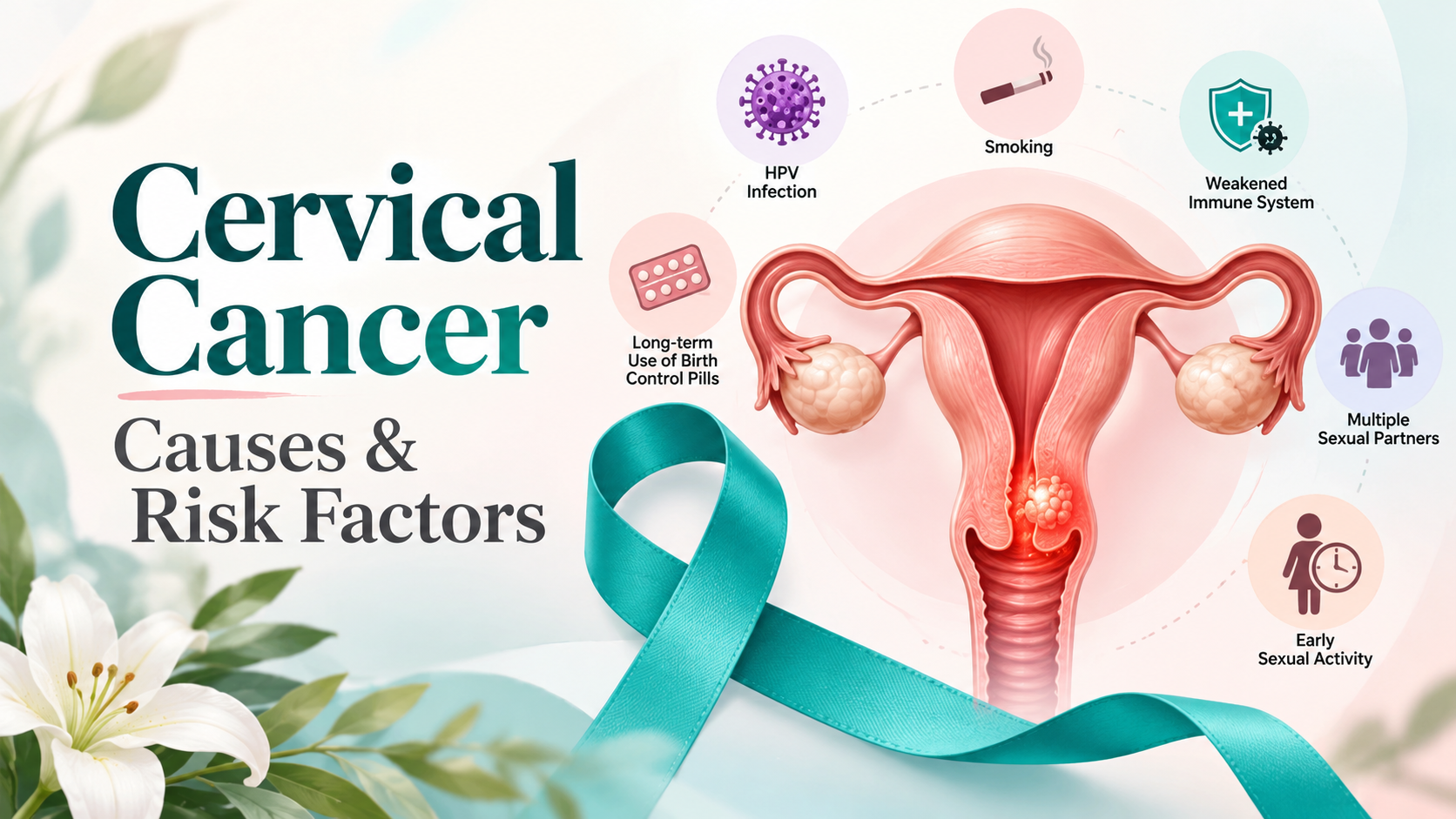
The central cervical cancer cause is persistent infection with high-risk strains of the Human Papillomavirus, commonly known as HPV. HPV is a sexually transmitted virus that has more than 100 strains, two of which, HPV 16 and HPV 18, together cause about 76% of all cervical cancers worldwide. In India, studies have confirmed that HPV 16 and 18 dominate as the primary drivers of cervical malignancy.
The HPV infection itself does not always lead to cancer. In most women, the immune system clears the virus naturally in one to two years. The problem arises when a high-risk strain persists in the cervical cells over many years, gradually causing cellular changes that, if not detected and treated, can progress to cancer.
Why Indian Women Face a Higher Burden
India accounts for nearly one-fifth of the global cervical cancer burden. Contributing factors include limited access to routine screening, low awareness about HPV vaccination, early age at marriage and first pregnancy, high parity (multiple childbirths) and barriers to gynaecological care in rural and semi-urban settings.
These are not reasons for shame or judgement. They are social and healthcare realities that, when understood, can be addressed.
Cervical Cancer Risk Factors Every Woman Should Recognise
Understanding cervical cancer risk factors does not mean you will develop the disease. It means you can make informed choices and know when to seek screening.
Smoking
Tobacco use is a significant risk factor for cervical cancer. Carcinogenic byproducts of cigarette smoke are found in the cervical mucus of women who smoke, where they damage the DNA of cervical cells and weaken local immune defences. Women who smoke are twice as likely to develop cervical cancer as non-smokers, even when accounting for HPV exposure.
A Weakened Immune System
Women with compromised immunity, whether due to HIV, long-term steroid use or immunosuppressive therapy after organ transplantation, have a reduced ability to clear HPV infections. This makes persistent viral infection more likely as well as accelerates the progression from cellular abnormality to invasive cancer.
Long-Term Use of Oral Contraceptives
Research has shown that women who use combined oral contraceptive pills for five or more consecutive years have a modestly elevated risk of cervical cancer. The risk gradually returns toward baseline after stopping. This does not mean oral contraceptives should be avoided, but women using them long-term should be consistent with cervical screening.
Early Age of Sexual Debut and Multiple Sexual Partners
HPV is primarily transmitted via sexual contact. So the more partners you have in your lifetime, the more likely you are to encounter a high-risk strain of HPV. Early sexual debut, particularly prior to 18 years of age when the cervix is still developing, also increases susceptibility to HPV infection.
Nutritional Deficiencies
Diets low in folate, vitamin A and antioxidants have been associated with increased susceptibility to HPV-related cervical changes. This is a risk factor particularly worth noting in communities where dietary diversity is limited.
Cervical Cancer Causes and Prevention: What You Can Actually Do
Knowing the causes of cervical cancer in females is only half the picture. The more important question is, “What can you do about it?”
Get vaccinated
The HPV vaccine works best when administered before sexual activity begins, preferably between ages 9 and 14. Women up to 45 years old can still get help. India’s national immunisation programme now includes the HPV vaccine, making it more accessible.
Undergo regular Pap smears and HPV testing
A Pap smear every three years starting at age 21, or an HPV test every five years from age 30, can detect cellular abnormalities long before they become cancerous. This is the single most powerful tool in cervical cancer causes and prevention.
Do not wait for symptoms
Early-stage cervical cancer is often silent. By the time symptoms such as abnormal bleeding or pelvic pain appear, the disease may already be at an intermediate or advanced stage.
Conclusion
Cervical cancer is not inevitable. It is a disease with a well-understood cause, identifiable risk factors and proven preventive strategies.
For Indian women, the path forward is straightforward: get vaccinated if eligible, get screened regularly and speak openly with your gynaecologist about your personal risk.
If you have a daughter, ensure she receives the HPV vaccine on schedule. The decisions you make today are among the most meaningful ones you can make for your long-term health.
FAQs
Can a woman develop cervical cancer without ever having had HPV?
It is extremely rare. Over 99% of cervical cancers are linked to persistent HPV infection. However, the absence of known HPV exposure does not eliminate the need for routine screening, since many HPV infections are asymptomatic and go unrecognised.
If I have been vaccinated against HPV, do I still need Pap smears?
Yes, without exception. The HPV vaccine protects against the most common high-risk strains. But not all strains. Whether or not you’ve been vaccinated, you still need regular cervical screening throughout your adult life.
Are the daughters of women with cervical cancer at higher risk?
Cervical cancer itself is not hereditary in the way that breast or ovarian cancer can be. However, daughters share similar social environments and lifestyle patterns, so ensuring they receive the HPV vaccine and begin routine screening at the right age is strongly advisable.