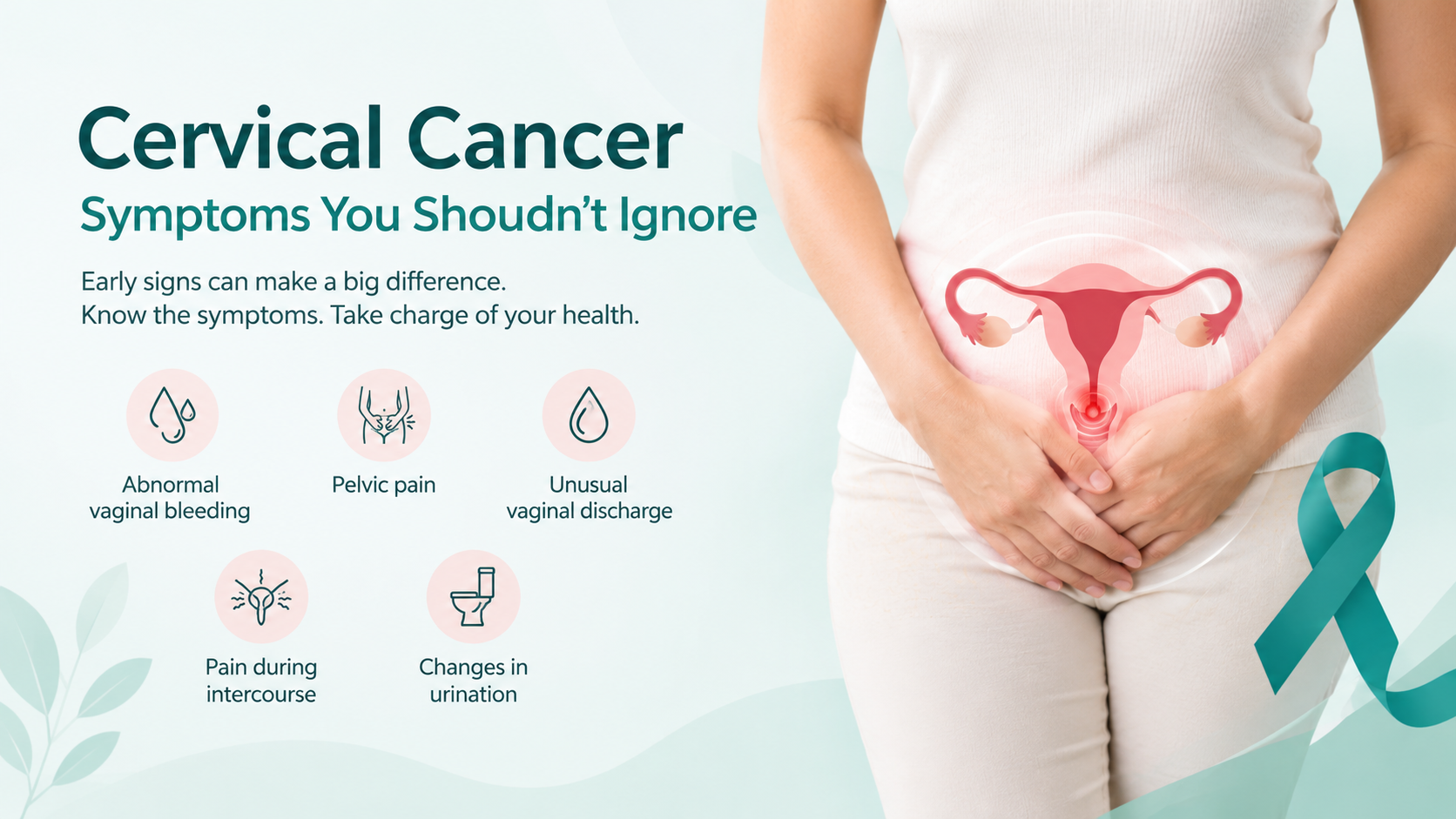

Cervical cancer can develop quietly. Precancerous changes usually cause no symptoms, and even early cervical cancer may not produce obvious warning signs. This is why regular cervical cancer screening remains important even when a woman feels completely well.
When symptoms do occur, however, they should not be ignored. Bleeding after intercourse, bleeding between periods or after menopause, persistent unusual vaginal discharge and unexplained pelvic pain are among the symptoms that warrant medical evaluation. These symptoms often have other, non-cancerous causes, but an examination can help identify the cause and ensure that a significant abnormality is not missed.
In India, cervical cancer remains a major health problem. According to the latest GLOBOCAN estimates (2024), India recorded about 79,000 new cases and 36,000 deaths from cervical cancer, making it the second most common cancer among Indian women after breast cancer, and the second leading cause of cancer death in women.
Why Cervical Cancer Can Go Undetected Early
The cervix is the lower, narrow part of the uterus that opens into the vagina. Persistent infection with high-risk types of human papillomavirus (HPV) causes almost all cervical cancers. Most HPV infections clear on their own, but a small proportion persist and can lead to precancerous changes and, over time, cervical cancer. According to the World Health Organization, this process usually takes 15–20 years, but it can be faster, 5–10 years, in women with a weakened immune system, such as those with untreated HIV.
Precancerous changes are generally asymptomatic, and early cervical cancer may also cause no symptoms. Screening is therefore important because it can detect high-risk HPV infection or cervical abnormalities before symptoms develop.
Warning Signs That Should Not Be Ignored
Unusual Vaginal Bleeding
Abnormal vaginal bleeding is one of the most common symptoms associated with cervical cancer. This may include bleeding after sexual intercourse, bleeding between periods or any vaginal bleeding after menopause. These symptoms can also have other, non-cancerous causes, but unexplained or recurrent abnormal bleeding should be evaluated rather than ignored.
Persistent or Unusual Vaginal Discharge
A persistent change in vaginal discharge can sometimes be associated with cervical cancer. The discharge may be watery, blood-stained or have an unpleasant smell. Many benign conditions can also cause abnormal discharge, but a persistent change—particularly when accompanied by bleeding—warrants a gynaecological assessment.
Pelvic Pain or Pain During Intercourse
Pelvic pain has many possible causes and is not specific to cervical cancer. However, persistent or unexplained pelvic pain, especially when associated with abnormal bleeding or discharge, should be assessed. Pain during sexual intercourse can also occur and should be discussed with a healthcare professional if it is new or persistent.
Vaginal Discomfort and General Symptoms
The World Health Organization also lists vaginal discomfort, unexplained weight loss, tiredness and loss of appetite among the symptoms for which women should consult a health professional. These symptoms are non-specific and have many other causes, but they deserve attention when they persist, especially alongside the other symptoms described here.
Symptoms That May Occur With More Advanced Cervical Cancer
As cervical cancer becomes more advanced, symptoms may result from involvement of nearby organs or other parts of the body. Symptoms alone, however, cannot determine the stage of cervical cancer.
Urinary or Bowel Symptoms
Advanced disease can sometimes affect the bladder, ureters or bowel. Symptoms may include difficulty passing urine, blood in the urine, urinary frequency, constipation or other persistent changes in bladder or bowel function. These symptoms have many possible causes and require clinical evaluation.
Swelling of the Legs
Persistent swelling of one or both legs can occasionally occur when advanced disease interferes with lymphatic or venous drainage in the pelvis. Leg swelling also has many non-cancerous causes and should be medically assessed.
Persistent Back, Pelvic or Bone Pain
Persistent back or pelvic pain can occur with locally advanced disease. Bone pain may occur if cancer has spread to the bones, although this is not specific to cervical cancer. New, persistent or unexplained pain should be evaluated in the appropriate clinical context.
Why Do Some Women Delay Seeking Care?
Cervical cancer symptoms can overlap with common gynaecological problems. Bleeding may be attributed to menstrual or hormonal changes, while vaginal discharge may be assumed to be an infection. Some women may also feel uncomfortable discussing symptoms such as bleeding after intercourse or unusual discharge. In India, screening has also been uncommon: the fifth National Family Health Survey (2019–21) found that only 1.9% of women aged 30–49 years had ever been screened for cervical cancer.
The important message is not to assume that these symptoms mean cancer, but not to ignore them either. New, unexplained or persistent abnormal vaginal bleeding, unusual discharge or pelvic symptoms should be discussed with a healthcare professional. Postmenopausal bleeding and recurrent bleeding after intercourse deserve assessment even when the amount of bleeding is small.
What to Do Next
If you have symptoms that could be related to the cervix, the first step is a gynaecological evaluation. Your doctor will take a detailed history and perform an appropriate examination. Depending on your age, symptoms and examination findings, further evaluation may include cervical cytology, HPV testing, colposcopy or other investigations.
It is important to distinguish screening from diagnosis. A Pap test or HPV test is primarily used for cervical cancer screening; it does not by itself confirm or exclude cancer in a woman with concerning symptoms. If an abnormal or suspicious area is seen on the cervix, a cervical biopsy may be recommended to establish the diagnosis.
Cervical cancer is highly treatable when diagnosed at an early stage. Timely evaluation of symptoms, together with appropriate screening and HPV vaccination, can reduce the burden of this largely preventable disease.
FAQs
Can cervical cancer symptoms look like a regular gynaecological problem?
Yes. Abnormal vaginal bleeding, unusual discharge and pelvic discomfort can occur with many benign gynaecological conditions. Symptoms alone cannot distinguish cervical cancer from these conditions. A clinical examination is important, and depending on the findings, HPV testing, cytology, colposcopy or biopsy may be required.
At what age should women begin cervical cancer screening?
For women in the general population, the World Health Organization recommends starting cervical cancer screening at age 30 with a high-performance test, such as an HPV test, repeated every 5–10 years. Women living with HIV, who are six times more likely to develop cervical cancer, should begin screening at age 25 and be screened every 3–5 years. In India, the national programme offers screening by visual inspection with acetic acid (VIA) to women aged 30–65 years, once every five years. Screening remains important even if you have received the HPV vaccine.
Is HPV the only cause of cervical cancer?
Persistent infection with high-risk HPV causes almost all cervical cancers. Most HPV infections clear on their own and never cause cancer. According to the World Health Organization, factors that increase the risk of a persistent infection progressing to cancer include the type of HPV, a weakened immune system (for example, untreated HIV), other sexually transmitted infections, a higher number of births, young age at first pregnancy, use of hormonal contraceptives and smoking.
References / evidence base
• World Health Organization. Cervical cancer fact sheet, updated 3 July 2026.
• World Health Organization. WHO guideline for screening and treatment of cervical pre-cancer lesions for cervical cancer prevention, 2021.
• International Agency for Research on Cancer. Global Cancer Observatory: India fact sheet (GLOBOCAN 2024), July 2026.
• Ministry of Health and Family Welfare, Government of India. Operational Framework: Management of Common Cancers, 2016.
• International Institute for Population Sciences. National Family Health Survey (NFHS-5), India, 2019–21.