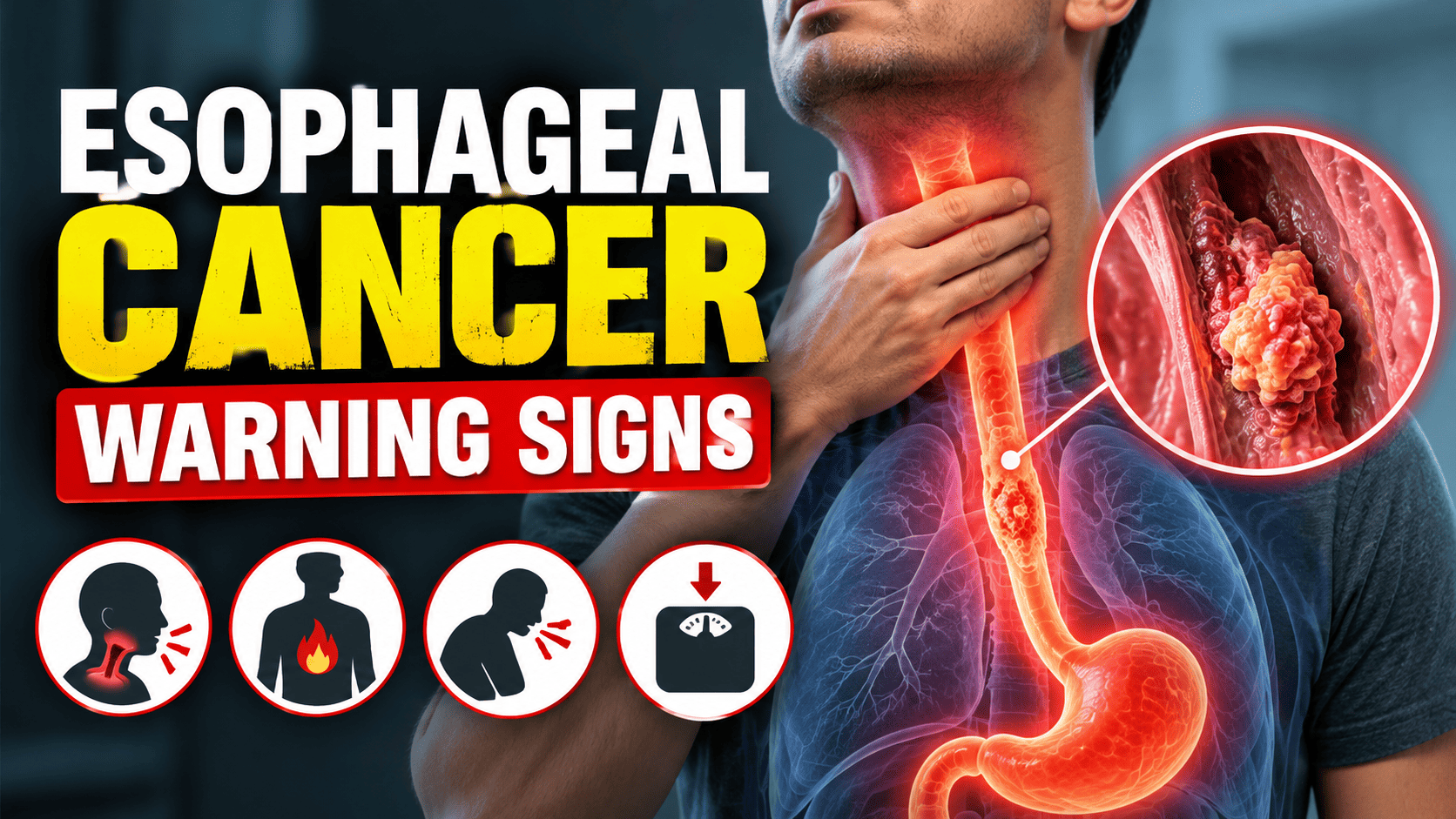
A little difficulty swallowing now and then rarely rings any alarm bells. Most of us have choked on a dry chapati or gulped water too fast. But when swallowing keeps getting harder over weeks, it stops being a minor inconvenience and starts being a signal worth listening to. This is often how esophageal cancer quietly makes its presence known. Recognising esophageal cancer signs early gives patients access to more treatment choices and considerably better outcomes.
This blog walks you through the esophageal cancer warning signs to watch for, why they occur and when to consult an oncologist at a trusted oncology hospital.
Early Symptoms of Esophageal Cancer
The early symptoms of esophageal cancer are often mild and easy to dismiss, which is precisely why they deserve attention rather than avoidance.
Difficulty or Discomfort While Swallowing
Medically called dysphagia, this is the most recognised of all esophageal cancer signs. It typically starts with solid foods feeling like they are "getting stuck" and can progress to difficulty with soft foods and liquids over time. Many patients unconsciously adapt by eating smaller bites or avoiding certain foods altogether, which can delay diagnosis.
Unintentional Weight Loss
Losing weight without trying, especially alongside reduced appetite, is one of the early symptoms of esophageal cancer that families often notice before the patient does. It usually happens because eating becomes physically uncomfortable or because the tumour affects normal digestion.
Chest pain or a burning sensation
A persistent chest pain, a pressure or burning feeling behind the breastbone that doesn't respond to standard antacid remedies, especially if it doesn't follow a pattern related to meals or physical activity, is one of the esophageal cancer warning signs.
Persistent Cough or Hoarseness
A cough that lingers for weeks, or a change in voice quality, can occur when a tumour affects nearby structures. On its own this rarely means cancer, but combined with other signs, it is worth discussing with a doctor.
Regurgitation and Indigestion
Frequent regurgitation of food, persistent indigestion or a sensation that food is not going down properly are also included
A little difficulty swallowing now and then rarely rings any alarm bells. Most of us have choked on a dry chapati or gulped water too fast. But when swallowing keeps getting harder over weeks, it stops being a minor inconvenience and starts being a signal worth listening to. This is often how esophageal cancer quietly makes its presence known. Recognising esophageal cancer signs early gives patients access to more treatment choices and considerably better outcomes.
This blog walks you through the esophageal cancer warning signs to watch for, why they occur and when to consult an oncologist at a trusted oncology hospital.
Early Symptoms of Esophageal Cancer
The early symptoms of esophageal cancer are often mild and easy to dismiss, which is precisely why they deserve attention rather than avoidance.
Difficulty or Discomfort While Swallowing
Medically called dysphagia, this is the most recognised of all esophageal cancer signs. It typically starts with solid foods feeling like they are "getting stuck" and can progress to difficulty with soft foods and liquids over time. Many patients unconsciously adapt by eating smaller bites or avoiding certain foods altogether, which can delay diagnosis.
Unintentional Weight Loss
Losing weight without trying, especially alongside reduced appetite, is one of the early symptoms of esophageal cancer that families often notice before the patient does. It usually happens because eating becomes physically uncomfortable or because the tumour affects normal digestion.
Chest pain or a burning sensation
A persistent chest pain, a pressure or burning feeling behind the breastbone that doesn't respond to standard antacid remedies, especially if it doesn't follow a pattern related to meals or physical activity, is one of the esophageal cancer warning signs.
Persistent Cough or Hoarseness
A cough that lingers for weeks, or a change in voice quality, can occur when a tumour affects nearby structures. On its own this rarely means cancer, but combined with other signs, it is worth discussing with a doctor.
Regurgitation and Indigestion
Frequent regurgitation of food, persistent indigestion or a sensation that food is not going down properly are also included among common esophageal cancer signs. They become even more problematic when they occur repeatedly over several weeks.
Who Should Be Extra Watchful
Certain individuals carry a higher baseline risk and should be particularly attentive to these symptoms:
● Long-term tobacco users, including smokeless tobacco and betel nut users
● Regular alcohol consumers
● People with a history of chronic acid reflux (GERD) or Barrett's esophagus
● Those who habitually consume very hot food or beverages
● Individuals with a family history of esophageal or GI cancers
Why Early Consultation Changes the Outcome
Esophageal cancer in India is frequently diagnosed at a later stage because its early symptoms overlap with common digestive complaints. This is one of the most important reasons awareness matters. Consulting a specialist promptly when symptoms persist beyond two to three weeks allows for endoscopic evaluation, biopsy, and staging while treatment options remain broadest.
A visit to a qualified oncologist does not mean cancer is confirmed. It means you are being proactive about your digestive health, which is always a reasonable and responsible step.
Diagnosis and What to Expect
If your doctor suspects something beyond routine indigestion, the usual next step is an upper GI endoscopy. It is when a thin camera examines the esophagus directly and allows tissue samples to be taken if needed.
Depending on findings, imaging such as CT or endoscopic ultrasound may follow to comprehend the extent of any abnormality. This structured, stepwise approach is standard practice at any reputable oncology hospital in India and is designed to give clear answers without unnecessary alarm.
Bottom Line
Most swallowing difficulties or occasional chest discomfort will have simple, treatable explanations that have nothing to do with cancer. But persistent, progressive or unexplained symptoms deserve a proper medical opinion rather than self-diagnosis or prolonged waiting.
Being informed about esophageal cancer warning signs empowers you and your family to act early, seek the right specialist as well as approach your health with confidence rather than fear. Timely evaluation remains the single most effective step you can take toward better outcomes.
FAQs
Is difficulty swallowing always a sign of esophageal cancer?
No. Trouble swallowing is generally due to acid reflux, esophageal spasms or minor infections. But if it lasts longer than two to three weeks, or if it is becoming progressively worse, you should see a medical provider. It helps to rule out serious causes.
Can early symptoms of esophageal cancer be managed without surgery?
Treatment depends entirely on the stage at diagnosis. Early-stage cases may be managed with endoscopic procedures or localised therapy, while advanced cases often require a combination of surgery, chemotherapy or radiation, decided by your treating oncologist.
How often should high-risk individuals get screened?
There is no fixed universal schedule, but individuals with chronic reflux, Barrett's esophagus or heavy tobacco and alcohol use should discuss a personalised screening plan with their doctor, especially if any warning symptoms appear.