The gallbladder is a small organ, so when something goes wrong inside it, the signals can be easy to miss. What makes this cancer difficult to catch early is that its earliest signs often resemble common digestive complaints that people dismiss or manage on their own for months.
This is precisely why awareness matters. The symptoms of gallbladder cancer are not always dramatic. Knowing what to look for, and when to act on it, can genuinely change the outcome of treatment. This blog is for you, whether you are someone managing a health concern yourself or a family member trying to support a loved one through a worrying time.
Why Gallbladder Cancer Is Often Detected Late
The gallbladder sits quietly beneath the liver, tucked away from easy examination. In its early stages, it rarely causes obvious discomfort. Many patients receive a gallbladder cancer diagnosis incidentally, either during surgery for gallstones or on imaging done for an unrelated reason. This is not unusual. It reflects the biology of the disease rather than any failure on the patient's part.
Understanding the early signs of gallbladder cancer is important because catching it before it spreads beyond the gallbladder wall significantly improves the outcomes of surgery and other treatments available at a good oncology hospital in India.
Gallbladder Cancer Signs and Symptoms to Watch For
Upper Right Side Abdominal Pain
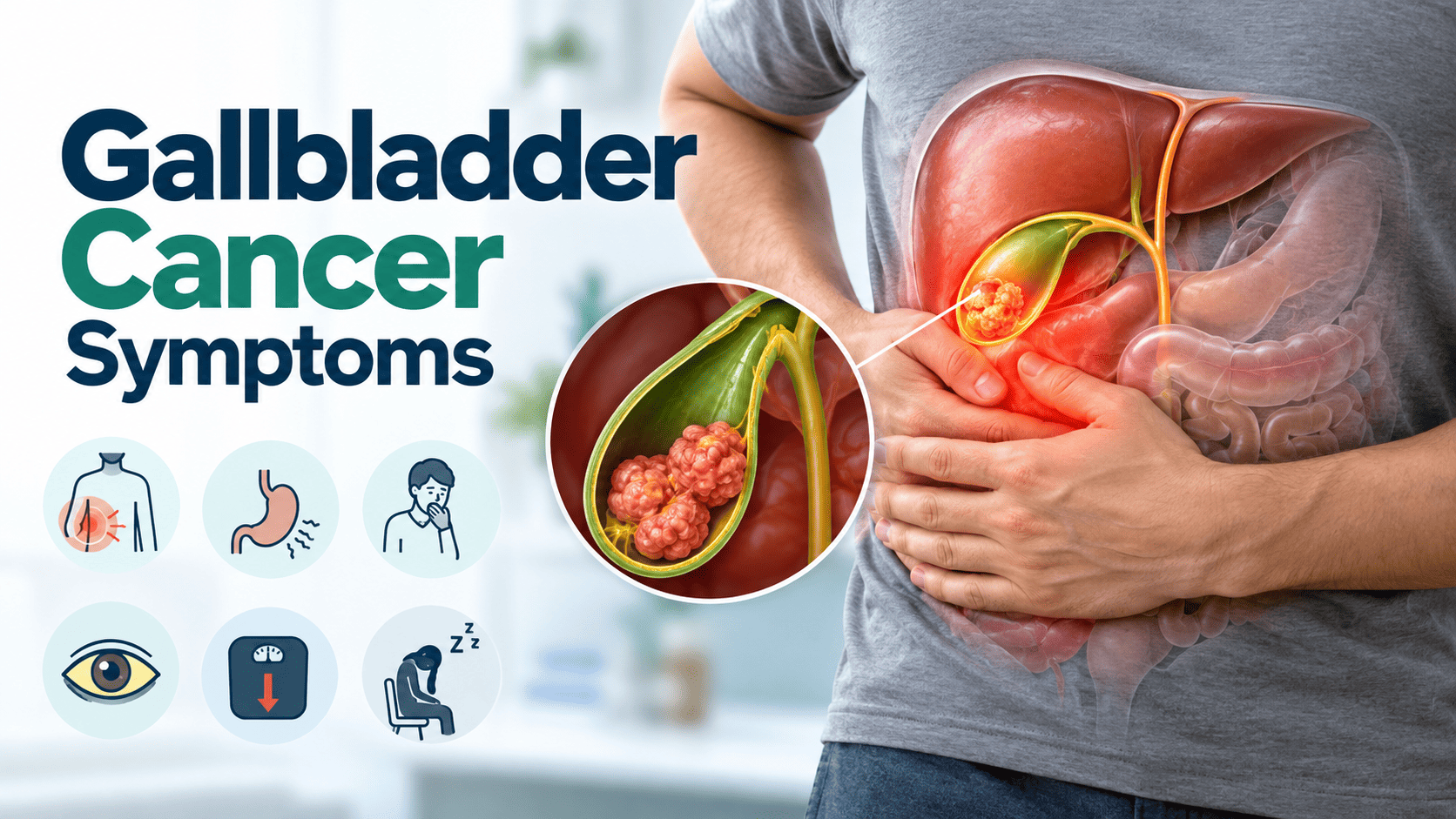
The most common symptom is a dull, constant ache in the upper right side of the abdomen, where the gallbladder is located just below the ribs. This pain may develop gradually and feel like indigestion or gas. In some patients it is made worse by eating fatty foods. Unlike ordinary acidity, this discomfort doesn't go away with antacids and keeps coming back.
Jaundice
Yellowing of the skin and eyes is one of the more noticeable gallbladder cancer signs and symptoms. It occurs when the tumour blocks the bile duct, averting bile from flowing normally into the small intestine. Jaundice is often followed by dark-coloured urine, pale or clay-coloured stools and intense itching of the skin.
If you or a family member develops jaundice without an obvious cause such as hepatitis, it warrants immediate evaluation at an oncology hospital.
Nausea and Anorexia
Gallbladder cancer can cause persistent nausea, loss of appetite, and a feeling of fullness after only a few bites of food. Patients often attribute them to acidity, stress or a stomach infection. When these symptoms continue for more than two to three weeks without improvement, they need to be investigated properly.
Unexplained Weight Loss
A change in weight, without changes to diet or activity level, is the body’s way of telling you that something internally is not working as it should. In the context of gallbladder cancer, this happens because the tumour affects normal digestive function as well as the body's ability to absorb nutrients.
Abdominal Swelling
Some patients notice that their abdomen looks or feels distended. This can happen due to an enlarged gallbladder or liver or, in more advanced cases, due to fluid accumulation in the abdominal cavity, a condition called ascites.
Early Signs of Gallbladder Cancer in the Indian Context
In India, gallstones are a significant risk factor for gallbladder cancer, especially among women above the age of 40. Many patients with gallstones live with discomfort for years without seeking surgical treatment. If you have known gallstones and begin to notice any of the symptoms described above, particularly pain that has changed in character, consult an oncologist without delay. A change in an existing symptom pattern is often more significant than a new one appearing from nowhere.
Other risk factors relevant to the Indian population include a history of typhoid, chronic infections of the biliary tract and exposure to certain industrial chemicals.
When Should You See a Doctor
The early signs of gallbladder cancer rarely seek your attention. They tend to appear silently. If any of the symptoms described here persist beyond two to three weeks, or if you belong to a high-risk group, visit a qualified oncologist for a thorough evaluation.
A simple ultrasound of the abdomen is usually the starting point, and it is widely available across oncology hospitals in India. Early detection means more treatment options as well as better outcomes.
Conclusion
Gallbladder cancer does not always make itself known in obvious ways, but it does leave signs worth paying attention to. Persistent abdominal discomfort, jaundice, unexplained weight loss and nausea are among the gallbladder cancer signs and symptoms that should never be casually dismissed. Awareness is not about fear. It is about giving yourself and your family the best possible chance to act at the right time.
FAQs
Are gallbladder cancer symptoms different in women compared to men?
The symptoms themselves are similar, but women in India, particularly those above 40 with a history of gallstones, carry a higher risk of developing gallbladder cancer. Any woman in this group experiencing persistent upper abdominal pain or jaundice should consult an oncologist promptly for further evaluation.
Can gallstones be mistaken for gallbladder cancer symptoms?
Yes, and this happens frequently. Both conditions can cause upper right abdominal pain, nausea and digestive discomfort. The distinction is made through imaging and, when needed, biopsy. If your gallstone symptoms have recently changed in pattern or severity, that warrants a reassessment at a qualified oncology hospital.
Is gallbladder cancer treatable if caught at an early stage?
Yes. When confined to the gallbladder wall, surgery offers a strong chance of complete removal and long-term control. Early detection, combined with treatment at an experienced oncology hospital under a dedicated oncologist, makes a meaningful difference in outcomes. The challenge lies in recognising the early signs before the disease progresses.