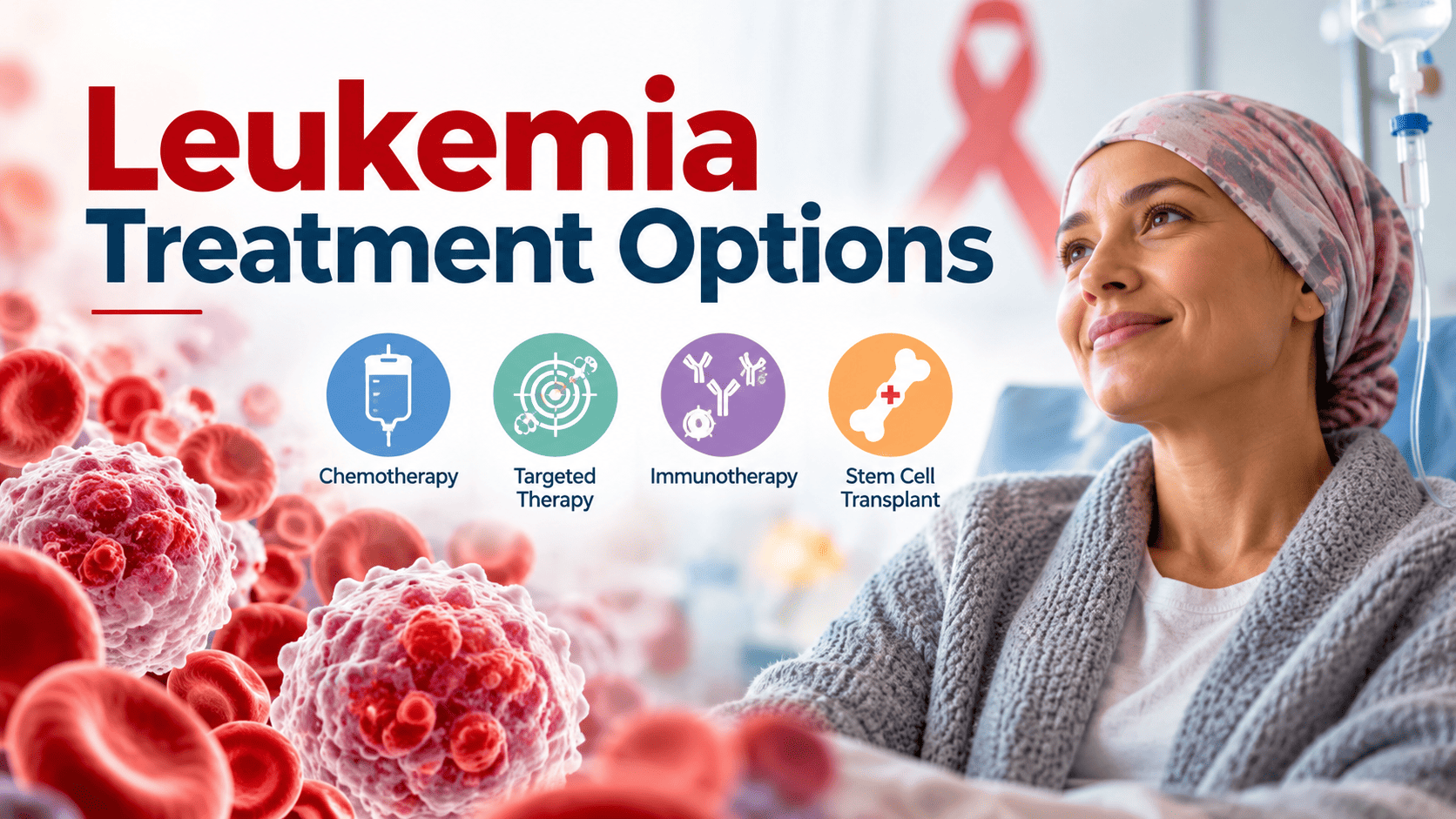

When a doctor says the words "blood cancer," the room goes quiet. For most patients and families, the diagnosis of leukemia brings a wave of fear, confusion and questions that feel too heavy to carry alone. Understanding what lies ahead, though, is one of the most effective ways to walk into treatment feeling prepared rather than overwhelmed.
That said, here is a straightforward guide to the leukemia treatment options available today, how they work and what you can realistically expect during the journey ahead.
What Makes Leukemia Different from Other Cancers
Leukemia is a blood cancer that starts in the bone marrow, where blood cells are produced. Unlike solid tumours, leukemia involves abnormal blood cells that crowd out healthy ones, affecting the body's ability to fight infection, carry oxygen and control bleeding.
There are four main types:
- Acute Lymphoblastic Leukemia (ALL)
- Acute Myeloid Leukemia (AML)
- Chronic Lymphocytic Leukemia (CLL)
- Chronic Myeloid Leukemia (CML)
Each type behaves differently, which is why treatment decisions are never generic.
Your oncologist's first priority will be to confirm the subtype, the stage and the genetic markers present in your cancer cells. These findings directly decide which leukemia treatment pathway is most appropriate for you.
The Main Leukemia Treatment Options Available in India
Chemotherapy
Chemotherapy remains the foundation of leukemia treatment, particularly for acute types. Drugs are given in structured cycles, either via an IV or orally, and are designed to damage rapidly dividing cancer cells. And when it comes to ALL and AML, the treatment often happens in phases. These include induction (to achieve remission), consolidation (to eliminate remaining disease) and sometimes maintenance therapy that continues for months or years.
Side effects are real and vary by drug combination, but most are manageable with supportive care. Fatigue, infection risk due to low white cell count and nausea are among the most commonly reported. Experienced haematology teams plan ahead for these and address them proactively.
Targeted Therapy
Targeted therapy is one of the most important advances in the leukemia treatment options in recent years. In CML, tyrosine kinase inhibitors (TKIs) such as imatinib, dasatinib and ponatinib have changed what was once a rapidly progressive disease into something that is manageable and often long-term. These medications interrupt some of the molecular signals leukemia cells use to grow, sparing healthy cells. The response rates with TKIs in CML are high. In fact, many patients maintain remission while on daily oral therapy without needing a transplant.
Immunotherapy and CAR-T Cell Therapy
Immunotherapy works by directing the body’s own immune system to identify as well as attack leukemia cells. One of the most important breakthroughs in this area is CAR-T cell therapy. It is when a patient’s own T-cells are genetically engineered to recognise and kill cancer cells.
This option is now available at select oncology hospitals in India, particularly for relapsed or refractory ALL in both adults and children. Indeed, this is a complex, resource-intensive treatment. However, outcomes in eligible patients have been encouraging.
Bone marrow transplantation
Patients who fail to achieve durable remission with chemotherapy or targeted therapy can be considered for a Bone Marrow Transplant (BMT), known as Haematopoietic Stem Cell Transplantation (HSCT). Allogeneic BMT that uses stem cells from a matched donor is the treatment of choice in leukemia. In this process, high-dose conditioning chemotherapy is introduced to damage the diseased marrow. Healthy donor cells are then infused to rebuild the blood system from the ground up.
Leading oncology hospitals in India offer dedicated BMT units with HEPA-filtered isolation rooms, HLA matching services and apheresis facilities for stem cell collection and cryopreservation.
What to Discuss with Your Oncologist Before Treatment Begins
Before blood cancer treatment starts, ask your oncologist to clarify the type and subtype of your leukemia, whether you need genetic or cytogenetic testing, the goal of the first phase of treatment, what supportive care is available and whether a clinical trial is relevant in your case. These are not intrusive questions. A good oncologist welcomes them.
Conclusion
Leukemia is serious, but it is also one of the blood cancers where medicine has made the most consistent progress over the past two decades. The range of leukemia treatment options today, from chemotherapy and targeted therapy to immunotherapy and transplant, gives patients at different stages and with different disease profiles a realistic path forward. Walking into that path informed makes a measurable difference.
FAQs
Is leukemia curable in India?
Certain types, particularly CML and childhood ALL, have very good long-term outcomes with current treatment. Acute types depend on subtype and response to initial therapy. Your oncologist will give you a realistic picture based on your specific case, not general statistics.
How long does leukemia treatment take?
It varies significantly by type. Acute leukemia treatment can span 6 months to 2 years depending on the protocol. CML patients on targeted therapy may continue oral medication for many years. BMT patients typically require 4 to 6 weeks in hospital along with months of close monitoring.
Does leukemia treatment affect daily life significantly?
It does during active blood cancer treatment. Fatigue, infection risk and clinic visits are part of the process. However, supportive services, including clinical nutrition, physiotherapy and psychological counselling at a good oncology hospital, can help manage these challenges as well as maintain quality of life through treatment.