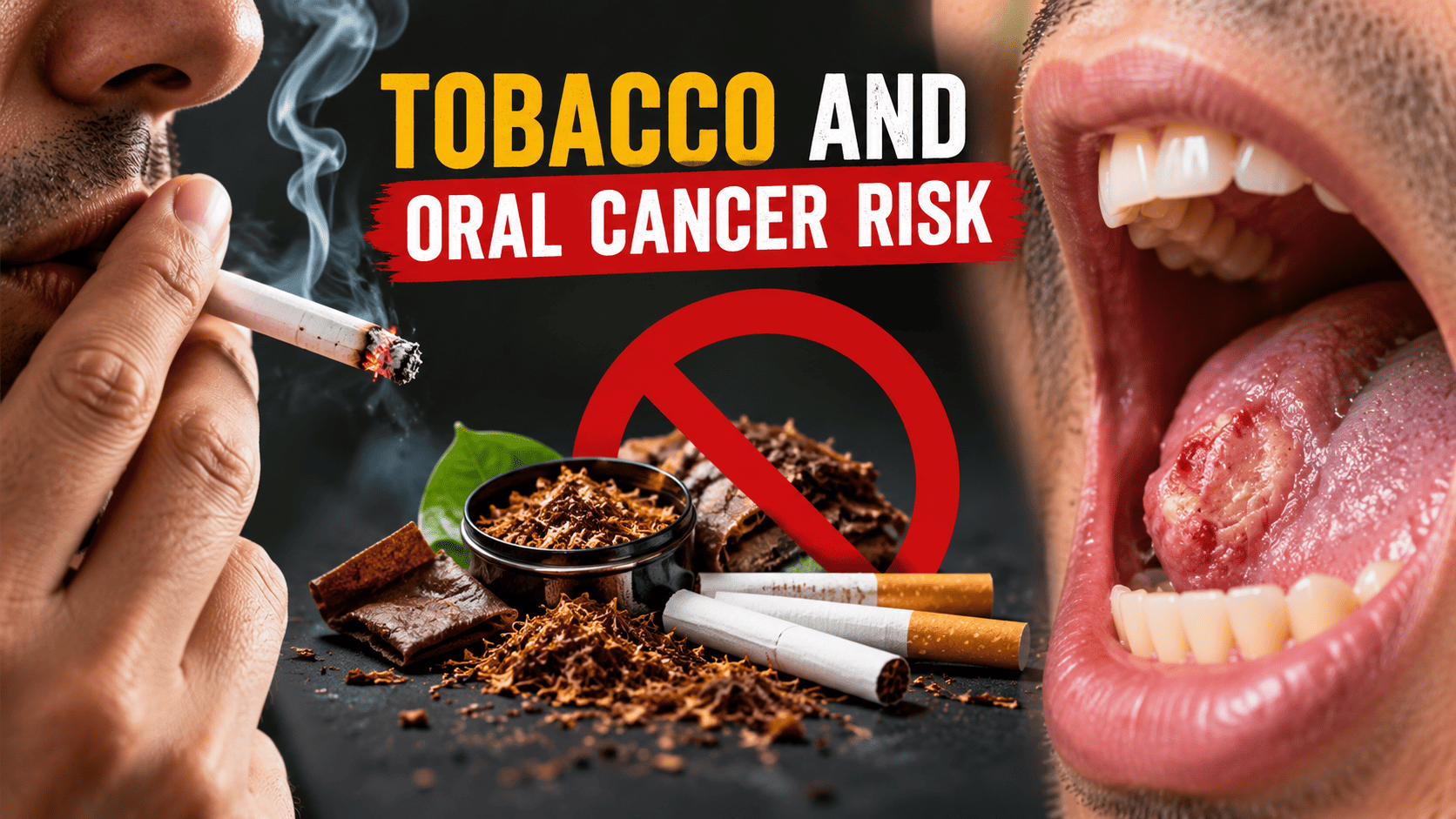

There is a habit that millions of Indians carry through their daily life, often without a second thought. A pinch of gutka after lunch. A cigarette/bidi shared between friends. Pan masala that has become part of a routine. These habits feel ordinary, but their consequences are anything but ordinary.
Oral cancer is one of the most preventable cancers, and yet India carries a disproportionate share of the global burden. Understanding why that is and what to watch for can genuinely save lives.
Why India Faces a Unique Oral Cancer Risk
Oral cancer ranks among the most common cancers in Indian men and sits within the top three for women. India alone contributes to one-third of oral cancer cases globally. This figure reflects the deep cultural roots of tobacco use across the country.
What makes the Indian context different from Western countries is not just the volume of tobacco use but the form it takes. Smoking is only part of the picture.
Smokeless Tobacco: The More Dangerous Habit
Gutka, khaini, pan masala with tobacco, zarda and mishri are consumed daily by millions of people across urban and rural India. These smokeless products sit in direct contact with the soft tissues of the mouth for extended periods, exposing the inner lining of the cheeks, gums and tongue to a concentrated mix of carcinogens.
There is a well-established causative association between oral cancer and chewing tobacco. The nitrosamines and polycyclic aromatic hydrocarbons in smokeless tobacco products cause repeated cellular damage to the oral mucosa. Over years of exposure, this damage accumulates and can trigger cancerous changes in the tissue. The risk does not require heavy use or decades of habit. Consistent use, even in moderate amounts, is enough to alter the biology of your mouth lining.
Bidis, Cigarettes and Combined Use
Smoking contributes separately and significantly to oral cancer risk. Bidis, which are far more widely used in rural India than cigarettes, deliver higher concentrations of carcinogens per puff because of their unfiltered design. The combination of smoking and chewing tobacco compounds the risk substantially. Many Indian users do both, which places them in a significantly higher risk category than those who use a single form of tobacco.
What Oral Cancer Actually Looks Like Early On
The early oral cancer symptoms are the ones people most often dismiss or delay acting on. This delay is costly. Most oral cancers, when caught early, are treatable with high success rates. When detected at a late stage, outcomes are considerably harder.
Mouth Cancer Symptoms You Should Not Ignore
If you or someone in your family uses any form of tobacco, be alert to the following mouth cancer symptoms:
- A white or red patch inside the mouth that has been there for more than two weeks and does not heal
- A sore or ulcer on the tongue, inner cheek or gum that has not resolved with time
- Difficulty chewing, swallowing or moving the tongue or jaw normally
- A persistent feeling of something stuck in the throat
- Numbness or burning sensation in any part of the mouth
- A lump or thickened area inside the cheek or on the lips
- Unexplained loosening of teeth in the absence of gum disease
- A change in the voice that is new and unexplained
One important note: oral cancer is often painless in its early stages. The absence of pain is not reassurance. A patch or lump that does not hurt still requires evaluation.
The Precancerous Stage: Your Window to Act
Before oral cancer fully develops, the tissue often goes through a precancerous stage. Oral submucous fibrosis, a condition where the mouth gradually loses its ability to open fully, is strongly associated with chewing tobacco and oral cancer progression in India.
Leukoplakia, which appears as thick white patches inside the mouth, and erythroplakia, which appears as red patches, are both conditions that an oncologist will take seriously and investigate promptly.
What To Do If You Notice These Signs
Do not wait to see if it resolves on its own. Visit a qualified oncologist or a specialist at an oncology hospital for a clinical examination. The mouth is one of the most accessible sites for early detection. A doctor can assess suspicious patches, perform a biopsy if needed and confirm whether further investigation or treatment is required.
An oncology hospital with a dedicated head and neck cancer team will evaluate oral cancer symptoms with the urgency it deserves, because early referral is where better outcomes begin.
The Role of Quitting Tobacco
Stopping tobacco use at any stage reduces risk. For those with pre-existing oral lesions, cessation can slow or even reverse early cellular changes. Tobacco cessation support, including counselling and pharmacological aids like nicotine replacement therapy, is available at most oncology hospitals and should be discussed with your treating team.
FAQs
Can oral cancer develop even if I have been using tobacco for only a few years?
Yes. While longer duration of use increases risk, oral cancer can develop in individuals who have used tobacco for a relatively short period, particularly if the frequency is high or if smokeless forms are used. In fact, early-stage mouth cancer symptoms can appear within just a few years of habitual use.
Are the early mouth cancer symptoms always visible?
Not always. Some early changes, such as submucous fibrosis, present as stiffness or restricted mouth opening rather than visible patches. This is why individuals with long-term tobacco habits should undergo periodic oral screening at an oncology hospital.
Is oral cancer treatable if found early?
When diagnosed at stage one or two, oral cancer responds well to treatment, which may include surgery, radiation or a combination. The earlier the detection, the more options there will be available at an oncology hospital and the less extensive the treatment will be.