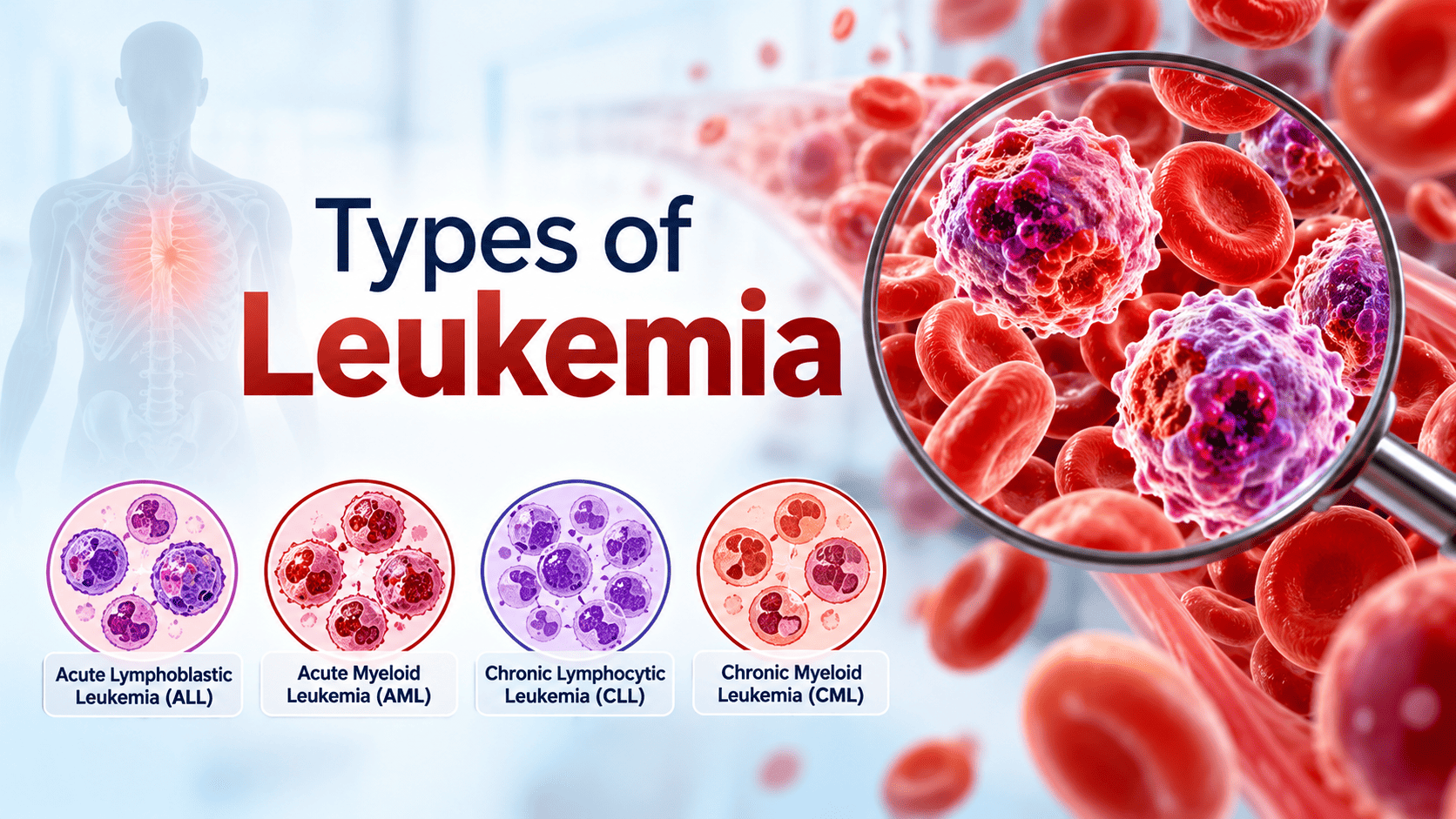

A leukemia diagnosis brings with it a flood of information that can feel impossible to process, especially when every term sounds unfamiliar. One of the first things your oncologist will explain is the type of leukemia involved, because this single detail shapes everything that follows, including how quickly treatment needs to begin, which treatment works best and what recovery looks like.
This blog breaks everything down clearly, so you can walk into your next consultation with a clearer head.
What Is Leukemia, and Why Does the Type Matter?
Leukemia is a cancer of the blood and bone marrow. It begins when blood cells, specifically the white blood cells that normally protect you from infection, start multiplying without control. These abnormal cells crowd out healthy red blood cells, platelets and functioning white cells. This is what causes the symptoms patients typically experience, including fatigue, frequent infections, unexplained bruising and bleeding that takes longer to stop.
The reason leukemia types matter so much in practice is that two people with "leukemia" may need completely different treatments. The biology of each type is distinct enough that a regimen designed for one form can be ineffective or even harmful for another.
The Four Main Leukemia Types
Leukemia is broadly classified along two axes: how fast it progresses (acute versus chronic) and which blood cell line it originates from (lymphoid versus myeloid). This gives four primary categories.
Acute Lymphoblastic Leukemia (ALL)
Acute leukemia of the lymphoid type, ALL is the most common leukemia in children in India, accounting for a large proportion of childhood cancer cases across the country. It progresses rapidly. Abnormal lymphoblasts (immature lymphocytes) multiply quickly and displace normal bone marrow function within weeks.
In adults, ALL is less common but more difficult to treat. Symptoms include persistent fatigue, pale skin, fever, bone pain and swollen lymph nodes. Treatment typically involves intensive multi-drug chemotherapy given in phases: induction, consolidation and maintenance. In high-risk cases, a bone marrow transplant may be recommended.
Acute Myeloid Leukemia (AML)
The second form of acute leukemia, AML originates in the myeloid cell line, which normally produces red blood cells, platelets and certain white cells. AML is more common in adults than ALL, and its onset is abrupt. Patients often report feeling well one week and severely unwell the next.
In India, AML diagnosis tends to occur at a younger median age compared to Western populations. Treatment involves intensive chemotherapy, and depending on genetic markers found in the leukemia cells, targeted therapy or transplant may follow. Genetic profiling of the tumour cells at diagnosis has become a standard step in any reputable oncology hospital setting, as it directly guides treatment selection.
Chronic Lymphocytic Leukemia (CLL)
Unlike the acute forms, chronic leukemia of the lymphoid type develops slowly. CLL primarily affects older adults and is often detected incidentally during a routine blood count done for an unrelated reason. Many patients with early-stage CLL do not require immediate treatment.
The abnormal B-lymphocytes accumulate gradually, and the immune system becomes progressively less effective. Symptoms, when they appear, include enlarged lymph nodes, night sweats, weight loss and recurring infections. Modern CLL treatment has improved significantly, with oral targeted agents like ibrutinib now offering effective, less toxic options than older chemotherapy regimens.
Chronic Myeloid Leukemia (CML)
CML is a chronic leukemia driven by a specific genetic abnormality called the Philadelphia chromosome, a translocation between chromosomes 9 and 22 that produces the BCR-ABL fusion gene. This gene drives uncontrolled myeloid cell growth.
CML is one of the areas where cancer treatment has transformed most dramatically. The introduction of tyrosine kinase inhibitors (TKIs) like imatinib has changed CML from a condition that once required bone marrow transplant as the only cure, into one that many patients manage effectively with a daily oral tablet.
Oncologists managing CML today monitor patients with regular BCR-ABL molecular testing to track treatment response precisely.
What Determines Which Type You Have?
Diagnosis involves a combination of a complete blood count, peripheral blood smear, bone marrow biopsy, immunophenotyping (flow cytometry), and cytogenetic or molecular testing. These are not optional extras. They are necessary steps to confirm the exact type and subtype, which in turn determines treatment.
Leukemia in India: A Note on Presentation
A recurring pattern seen across Indian oncology settings is late presentation. Patients often attribute early symptoms like fatigue or mild fever to anaemia, stress or seasonal illness. By the time leukemia is confirmed, some cases have already progressed. Early blood testing when symptoms persist beyond two to three weeks can make a meaningful clinical difference.
Understanding the various leukemia types is the starting point for every informed patient conversation.
The Right Next Step
If you or someone in your family has received a leukemia diagnosis, the type is the first piece of information to understand fully. Sit with your oncologist and ask specifically about the subtype, the genetic markers found and what those findings mean for treatment.
Leukemia is serious, but across all four main types, treatment options today are more effective and more targeted than they were even a decade ago.
FAQs
Can leukemia be completely cured?
Yes, depending on the type and stage. ALL in children has remission rate of 98% with modern chemotherapy. CML managed with TKIs allows many patients to live full, normal lives. Outcomes vary by type, age and how early diagnosis happens.
What is the difference between acute and chronic leukemia in terms of urgency?
Acute leukemia requires treatment to begin within days to weeks of diagnosis. Delays can be life-threatening because the disease progresses rapidly. Chronic leukemia often allows more time for planning. And in some cases, treatment may not begin immediately at all.
How often should someone with a family history of leukemia get tested?
There is no single universal screening protocol for leukemia in India. However, anyone with a first-degree relative diagnosed with leukemia, or anyone experiencing persistent unexplained fatigue, recurrent infections or unusual bruising, should have a full blood count done and discuss the results with a physician rather than waiting.