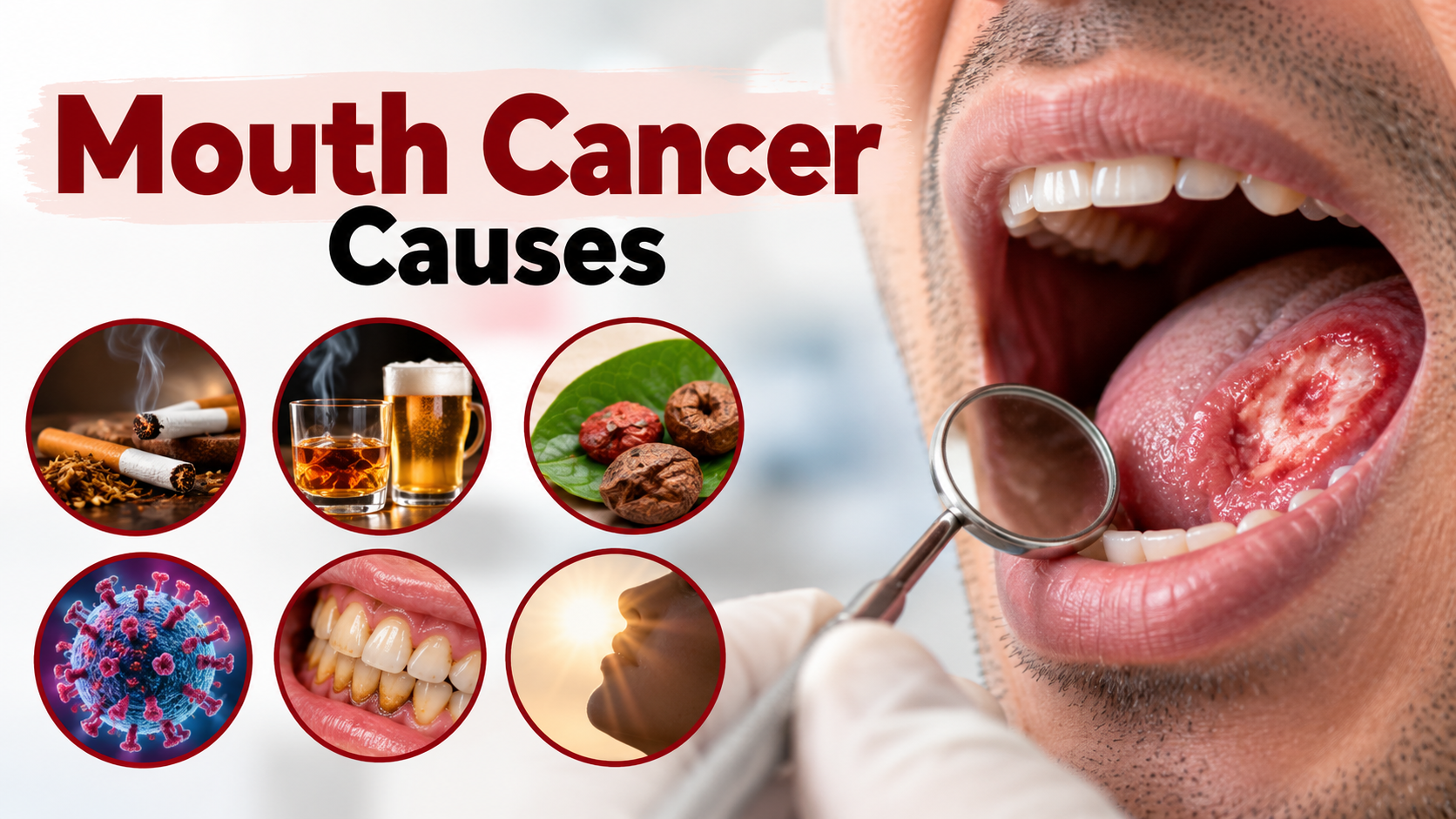

Oral cancer does not announce itself loudly. It often begins quietly, with a sore that will not heal or a patch inside the mouth that was not there before. By the time most people in India seek help, the disease has already progressed further than it needed to.
Understanding oral cancer causes is not about living in fear. It is about recognising what puts you or someone you love at genuine risk so that the right step is taken at the right time.
Why Mouth Cancer Deserves More Attention in India
India carries one of the highest burdens of oral cancer in the world. According to the Indian Council of Medical Research (ICMR), oral cavity cancer is among the top three cancers in India, particularly in men.
This is not a coincidence. Several causes of mouth cancer are deeply tied to habits that are culturally normalised across different parts of the country, which makes awareness all the more important.
The Primary Causes of Mouth Cancer
Tobacco Use in All Its Forms
This is the single biggest driver of oral cancer in India. Tobacco is consumed in more ways here than almost anywhere else in the world. Cigarettes, beedis, chewing tobacco, gutka, khaini and paan masala with tobacco all deliver carcinogens directly to the tissues of the mouth, tongue, cheek and gums.
Chewing tobacco is particularly concerning because the contact between the tobacco and oral tissue is prolonged. The carcinogens seep into the mucosal lining repeatedly, over years, eventually triggering cellular changes that lead to malignancy. If tobacco use in any form is part of someone's daily routine, it is the first and most urgent mouth cancer risk factor to address.
Areca Nut and Betel Quid
Even without tobacco, areca nut on its own is classified as a Group 1 carcinogen.
Paan with betel leaf, lime and areca nut is a post-meal ritual for millions of Indians. Over time, the habit leads to a condition called oral submucous fibrosis, which is a pre-cancerous condition that significantly raises the risk of oral cancer. Many people do not realise that paan without tobacco still carries serious risk.
Alcohol Consumption
Alcohol acts as a solvent in the oral cavity. This makes it easier for carcinogens to penetrate the mucosal lining. When alcohol use is combined with tobacco, the risk multiplies rather than simply adds. This combination is one of the most well-documented oral cancer causes globally, and it is increasingly relevant in urban India, where both habits often coexist.
Other Mouth Cancer Risk Factors Worth Knowing
HPV Infection
Human Papillomavirus, specifically HPV-16, has been identified as a cause of oropharyngeal cancers. It is particularly seen affecting the base of the tongue and tonsils. While HPV-related oral cancers are more commonly discussed in Western populations, awareness in India is growing.
Chronic Sun Exposure
Cancer of the lip, though less common, is associated with prolonged sun exposure. This is particularly relevant for individuals who work outdoors for extended hours without any protection.
Poor Oral Hygiene and Dental Neglect
Chronic irritation from broken teeth, ill-fitting dentures or long-standing infections creates conditions where abnormal cell growth becomes more likely over time. This is one mouth cancer risk factor that is entirely within reach to address.
Nutritional Deficiencies
Diets consistently low in vitamins A, C and E reduce the protective capacity of the oral mucosa. In communities where dietary diversity is limited, this adds a layer of vulnerability.
When to See an Oncologist
If a mouth ulcer has not healed in three weeks, if there is a red or white patch inside the mouth, or if there is unexplained jaw pain or difficulty swallowing, a visit to an oncologist should not be delayed.
An early evaluation at a trusted oncology hospital can determine whether what you are seeing requires further investigation, and catching oral cancer early makes a significant difference to treatment outcomes and quality of life.
Final Thoughts
Causes of mouth cancer in India are, in large part, preventable. Tobacco and areca nut use account for the majority of cases, and both involve habits that can be addressed with the right support. If you or someone you know carries any of these risk factors, please do not wait for a symptom to become serious before seeking a medical opinion. Awareness is the first step. Acting on it is what saves lives.
FAQs
Can mouth cancer develop in people who have never smoked or chewed tobacco?
Yes, it can. HPV infection, alcohol use, chronic dental irritation and prolonged sun exposure are all recognised causes of mouth cancer that are independent of tobacco. Anyone with a non-healing oral sore should seek a clinical evaluation regardless of tobacco history.
Is oral submucous fibrosis a serious condition?
It is. Oral submucous fibrosis is a pre-cancerous condition. It is caused primarily by areca nut consumption. It causes progressive stiffening of the oral tissues as well as carries a meaningful risk of turning malignant if the habit continues. An oncologist at a reputed oncology hospital can evaluate its severity and guide management.
At what age should someone get screened for oral cancer in India?
People who use tobacco regularly and are over 30 years of age should consider an annual oral cancer screening. Early detection is the key to better treatment outcomes.