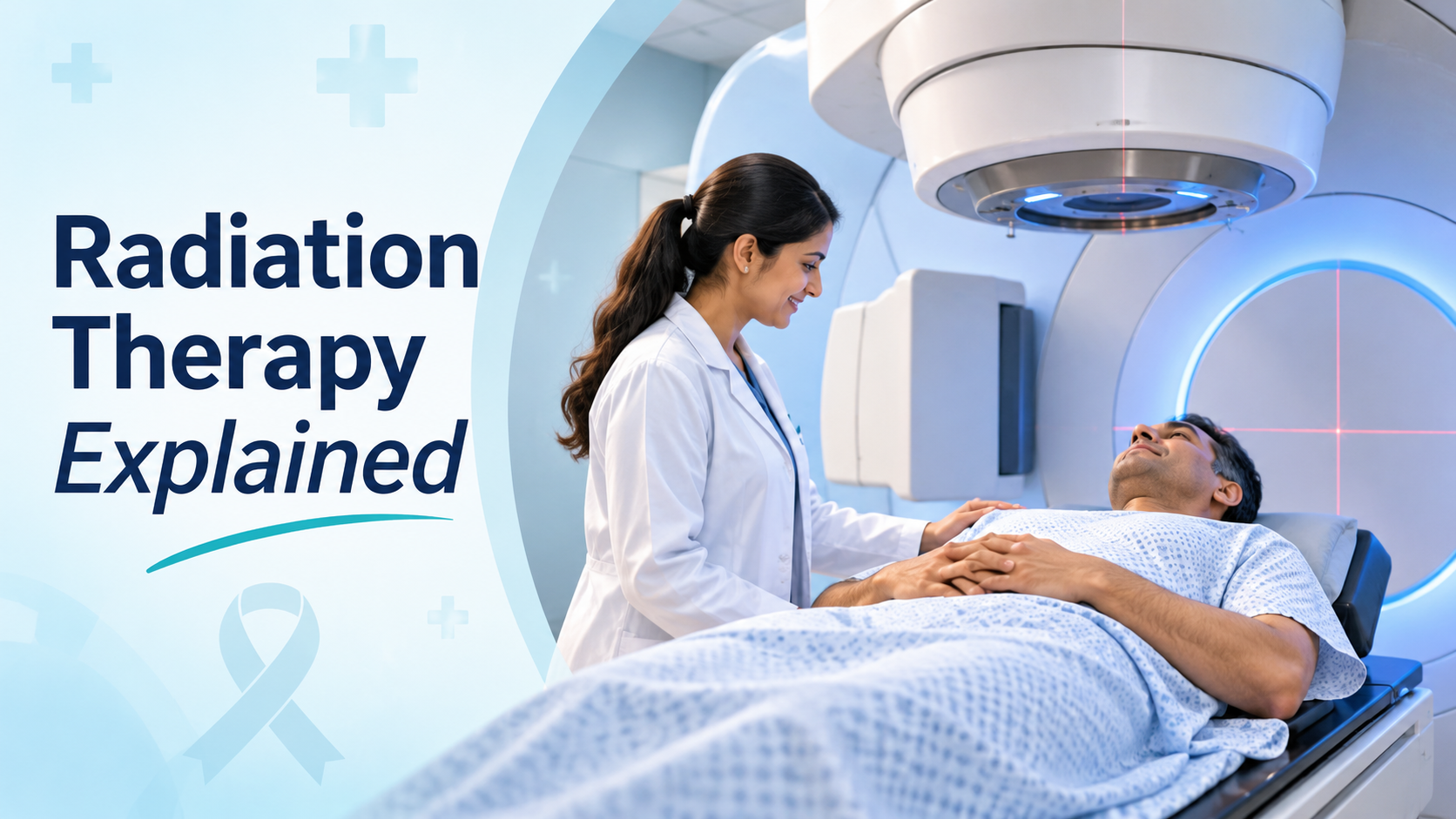

When a loved one is diagnosed with cancer, the list of medical terms that follows can feel overwhelming. Radiation therapy for cancer is one of the most commonly recommended treatments in oncology, yet most patients arrive at their first consultation with very little understanding of what it actually involves.
This blog is written for you, whether you are the patient or the person sitting beside them at every appointment, to help you walk into the conversation with clarity rather than fear.
What Is Radiation Therapy?
Radiotherapy uses precisely targeted high-energy rays, most commonly X-rays, to damage the DNA inside cancer cells. When cancer cell DNA is damaged beyond repair, those cells lose their ability to divide and grow. Over time, these cells gradually die.
The key point here is precision. Modern radiation treatment is not a blanket exposure of the body to radiation. It is a carefully planned, image-guided process where oncologists and medical physicists work together to deliver the maximum dose to the tumour while protecting the healthy tissue around it as much as possible.
Who Recommends It and When?
Your oncologist may recommend radiotherapy as the primary treatment for certain cancers or, alongside surgery and chemotherapy, as part of a combined approach. It is used across a wide range of cancers, including those affecting the brain, head and neck, breast, uterine cervix, rectum, lungs and prostate. In many childhood cancers, radiotherapy has proven to be effective in increasing the chances of a cure. Also, radiotherapy is an excellent modality for some stubborn benign tumours such as meningiomas, schwannomas and keloids.
In some cases, it is given before surgery to shrink a tumour, and in others, after surgery to eliminate any remaining cancer cells. For advanced-stage cancers, radiation treatment is also used to manage pain and improve quality of life, even when a cure is no longer the primary goal.
How Is the Treatment Delivered?
In India, the most widely used form is external beam radiotherapy, where a machine called a linear accelerator directs radiation beams at the body from outside. Typically, there are two components of treatment that are executed. First is the planning process, wherein you are subjected to high-resolution imaging (CT scan or PET-CT scan with or without MRI) of the region to be treated. Then the oncologist, along with the physicists, prepares the most suitable plan for your particular case. The treatment is then verified and delivered with the help of the oncologist and radiation technologists.
You lie on a treatment table in a specific, reproducible position while the machine moves around you. The session itself is painless and typically lasts between fifteen and thirty minutes, though actual radiation delivery within that time is only a few minutes. Treatments can last anywhere between one week and up to seven weeks, depending on the site and stage of the tumour and the biology of the disease.
Other Forms of Radiation Therapy for Cancer
-
Brachytherapy involves placing a radioactive source directly inside or very close to the tumour, as used in uterine cervical, head and neck, and prostate cancers.
-
Stereotactic radiosurgery/radiotherapy (SRS/SRT) delivers a very high dose to a small, precise area in one or a few sessions. Typically used for brain, early lung, pancreas, liver, prostate and benign tumours.
-
Intra-operative radiotherapy is a specialised form of radiation in which a single high dose of radiation is delivered directly to the surgical bed after the surgeon has removed the grossly visible tumour and pushed away the surrounding normal organs to protect them. This is used in specific scenarios such as breast, pancreatic, sarcomas and recurrent cancers. This modality is available only in some specialised/tertiary oncology centres.
How Does Radiation Therapy Affect the Body?
This is the question most patients are afraid to ask directly, so it is worth addressing honestly. Radiotherapy does cause side effects, but they vary significantly depending on where in the body the radiation is directed, the total dose given, and the patient's overall health.
Common side effects include fatigue, skin changes in the treated area (similar to tanning caused by exposure to sunlight) and localised symptoms depending on the area being treated. For example, patients receiving head and neck radiation may experience a dry mouth or difficulty swallowing, while those receiving pelvic radiation may notice digestive changes.
Importantly, these side effects are manageable, and a good oncologist and their team will anticipate them before they occur rather than waiting for you to report them. Nutritional support, skin care guidance, medication to manage nausea or pain and psychological counselling are all part of what a well-rounded oncology hospital provides alongside the treatment itself.
Most importantly, you need to understand that with improved technology and the availability of modern supportive care, radiotherapy is safely delivered and well tolerated by even young children as well as elderly patients with multiple co-morbidities.
How Your Care Team Supports You Through It
The radiation oncology team at a comprehensive oncology hospital includes more than just your oncologist. Medical physicists, radiation therapists, dietitians, counsellors, supportive care and rehabilitative specialists all contribute to your care. The team will advise you to follow some guidelines to better tolerate the treatment depending on your needs. Adhering to these guidelines would allow you to breeze through your therapy with as few complaints as possible.
Weekly review appointments allow the team to catch side effects early and adjust supportive care before those effects become difficult to manage. Ideally, radiotherapy works best when delivered without any gaps in treatment. However, sometimes it may become imperative to do so to allow patients to recover from some troubling toxicity. Patients are encouraged to report changes in appetite, sleep and mood, because these matter as much as the physical side effects.
Ending Note
Radiation therapy for cancer is a well-established, evidence-based treatment that has helped millions of patients across India and around the world.
Understanding what radiotherapy involves, what to expect during treatment and how your care team can support you through it is the first step toward facing it with greater confidence.
Speak openly with your oncologist, ask every question that comes to mind and trust that today's radiation treatment is far more targeted and manageable than most people imagine before they begin.
FAQs
Will I be radioactive after my radiation therapy sessions?
No. External beam radiotherapy leaves no radioactivity in your body after each session. You can safely be around family members, including children, throughout your course of radiation treatment without any risk to them.
How many radiotherapy sessions will I need?
The number of sessions depends on the cancer type, stage and the treatment goal. Some patients complete treatment within a week, whereas others may receive daily sessions over five to seven weeks. Your oncologist will explain the full schedule before you begin.
Can I continue daily activities during radiation treatment?
Most patients stick to a modified version of their daily routine, such as light work and household activities, while undergoing radiation treatment. Fatigue is often a common reason behind making adjustments in activity levels. Therefore, the care team at the oncology hospital guides patients on what is safe and realistic for the given situation.